|
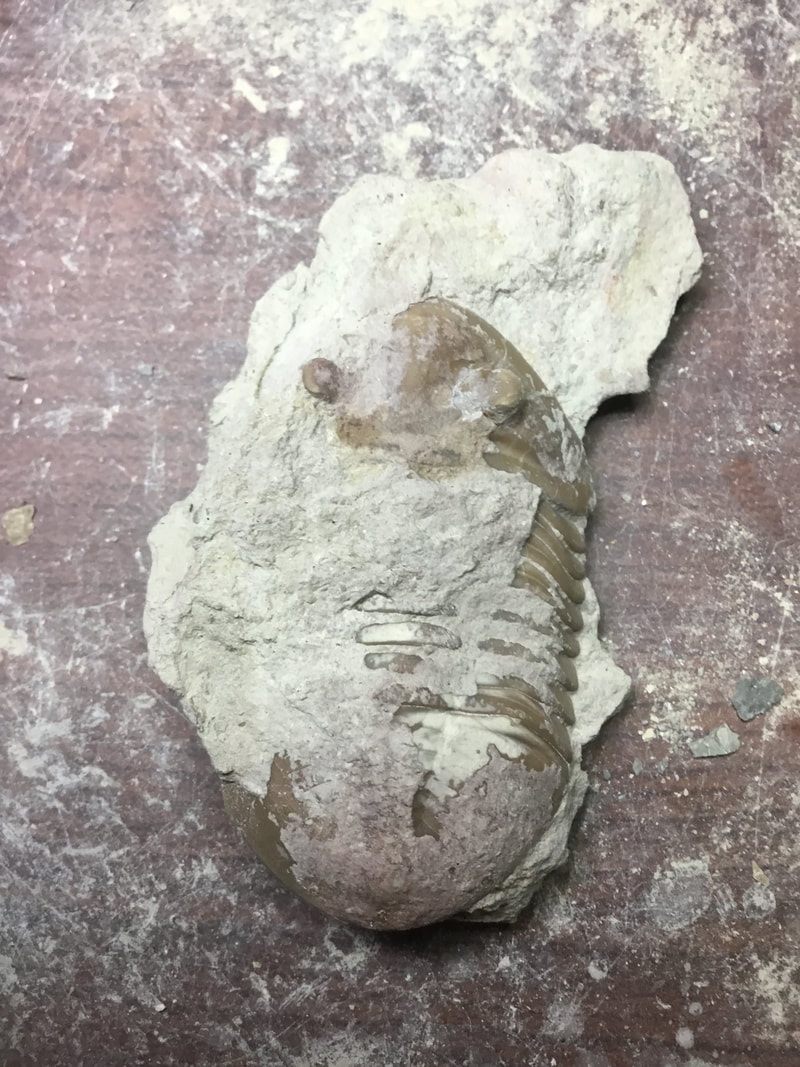
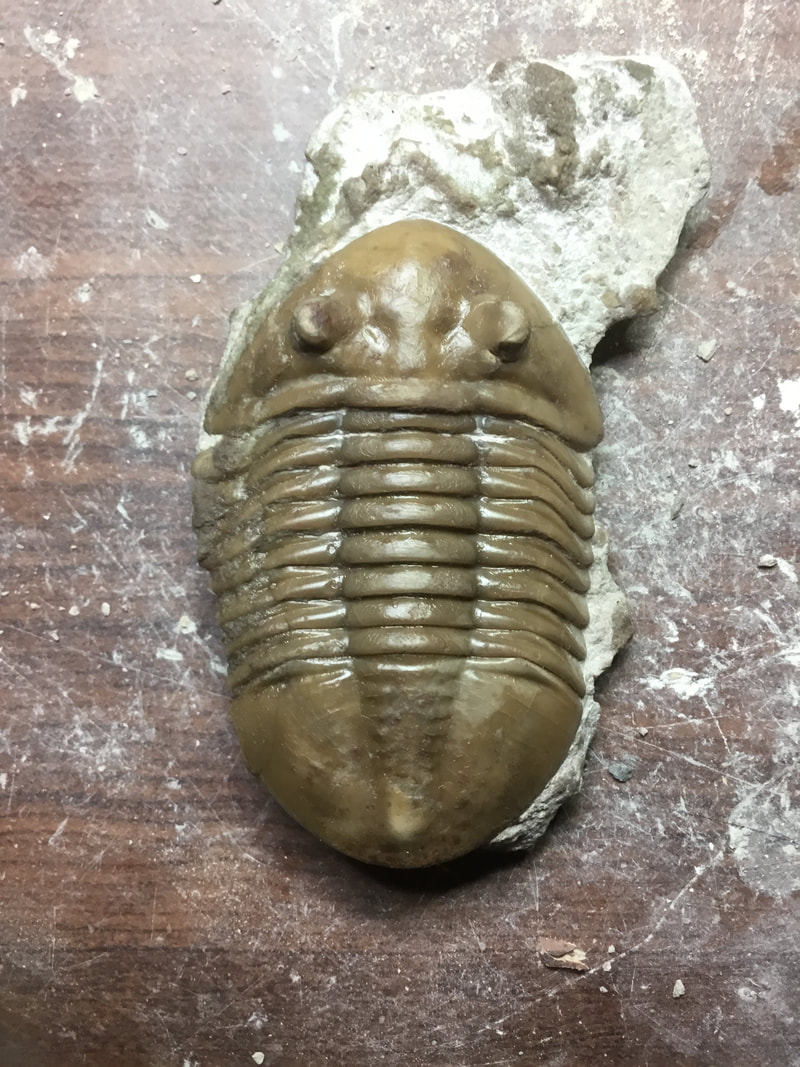
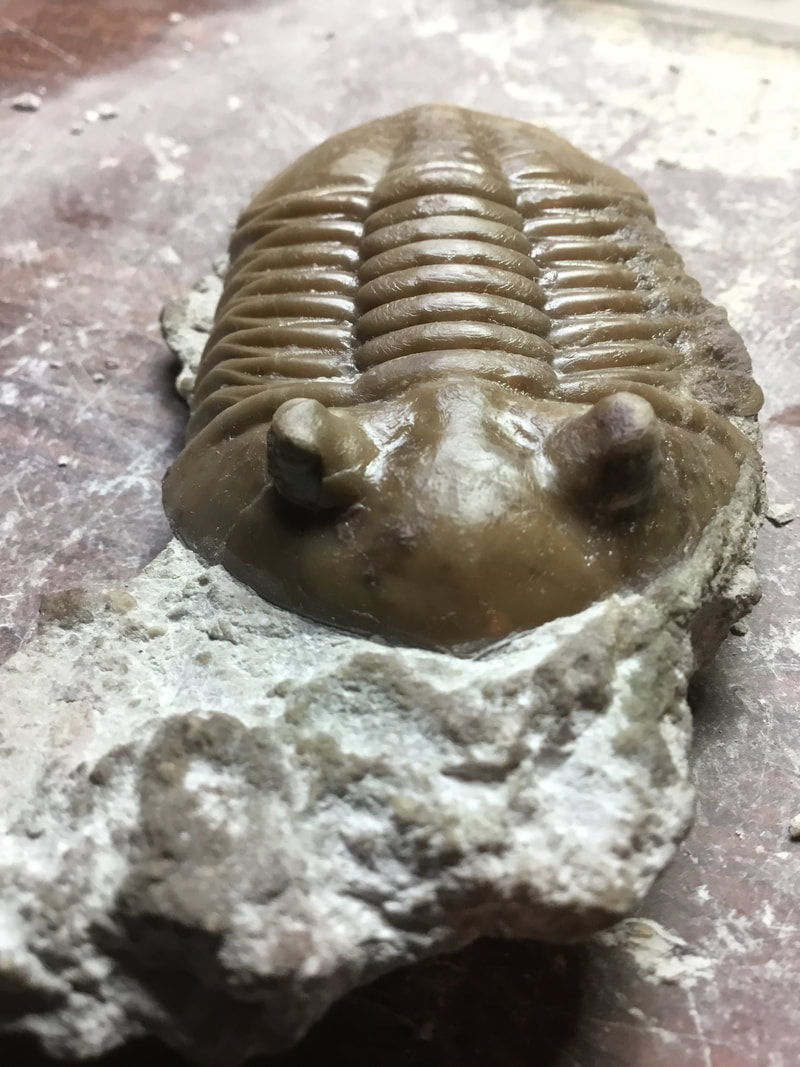
A four hour preparation session reveals a full Asaphus lepidurus. I knew this one had problems going into it, such as discolouration of the shell, some very sticky calcitic film, and possibly some damage. However, it turned out much better than I anticipated. I had thought it was likely missing a good chunk of the left side, but I was delightfully incorrect. It is a bit crushed/flattened out on that side, though, but worthy of being put in the display cabinet. 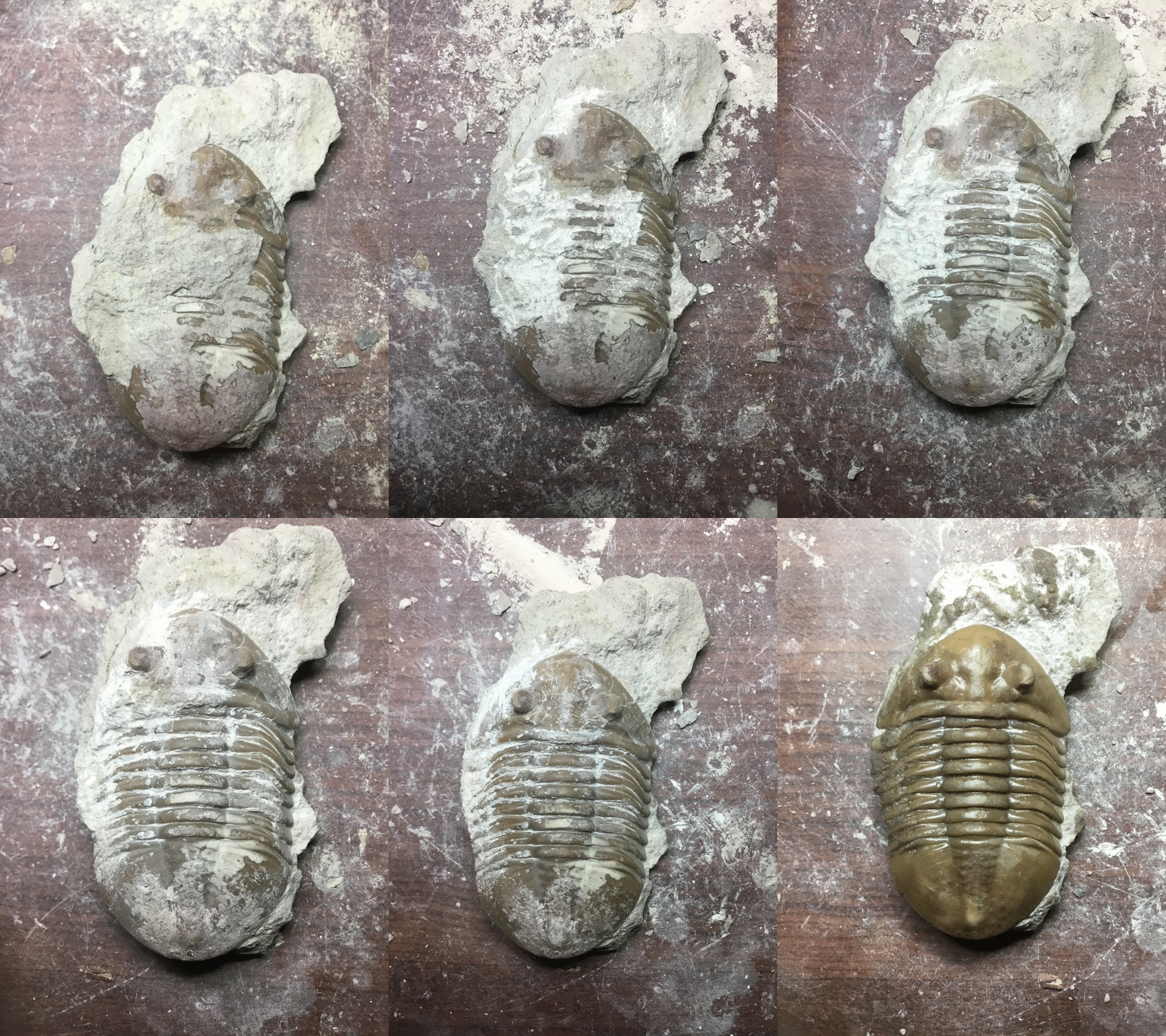 Time lapse GIF above, and a "before and after" picture side by side:
And finally just two pictures detailing how I got into the nooks and crannies. The entire prep involved a range of tools (air scribe, two Dremels, a lot of pin vise work, and Paasche AECR air eraser using dolomite at pressures 20-40 PSI). Believe it not, most of the work was painstakingly done by hand with the pin vise. As the matrix is far too thin on the left side, and the pleural segements stretched out / flattened which makes them a bit more fragile, I'm leaving that side alone.
I received my newest batch of Russian asaphids today, and all credit due to Mikhail for his preparation skills. These are large and perfectly prepared trilobites, a welcome addition to my growing collection. 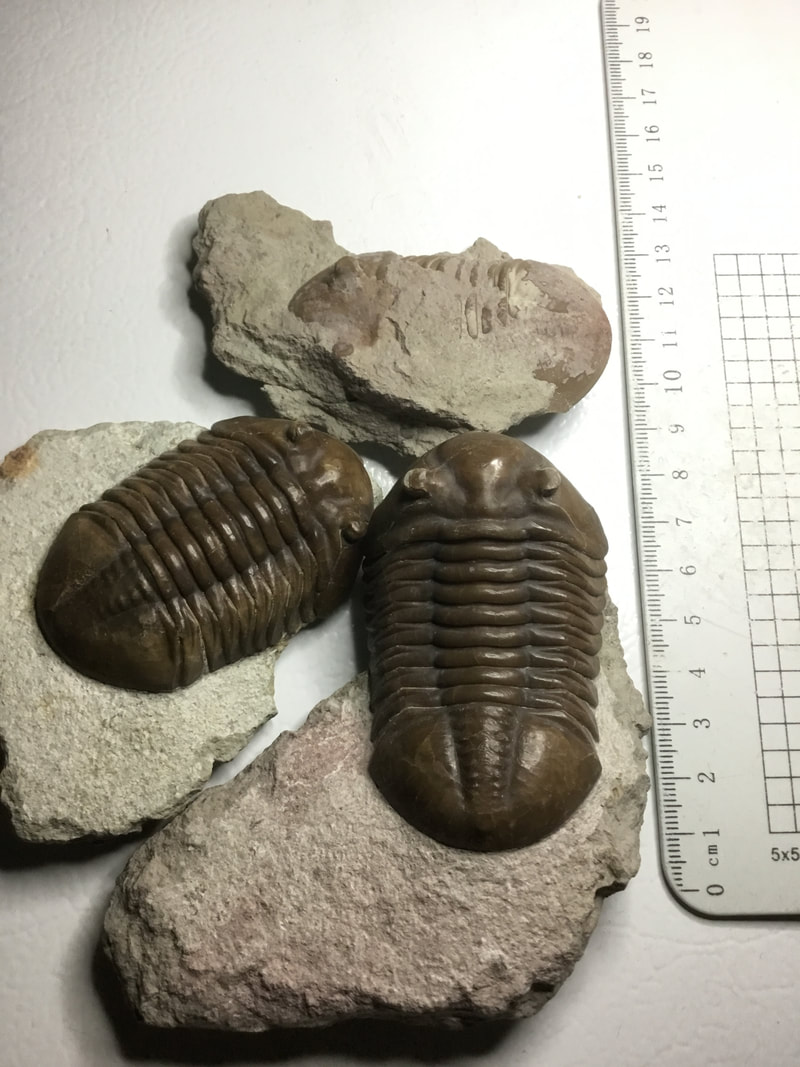 So the trio I got today. On the top is an Asaphus lepidurus for me to prep. On the left is an Asaphus expansus gracilis. On the right is the aptly named robust Asaphus robustus. Wow. The pictures hardly do these justice, but I will be re-shooting images for the trilobite gallery soon. 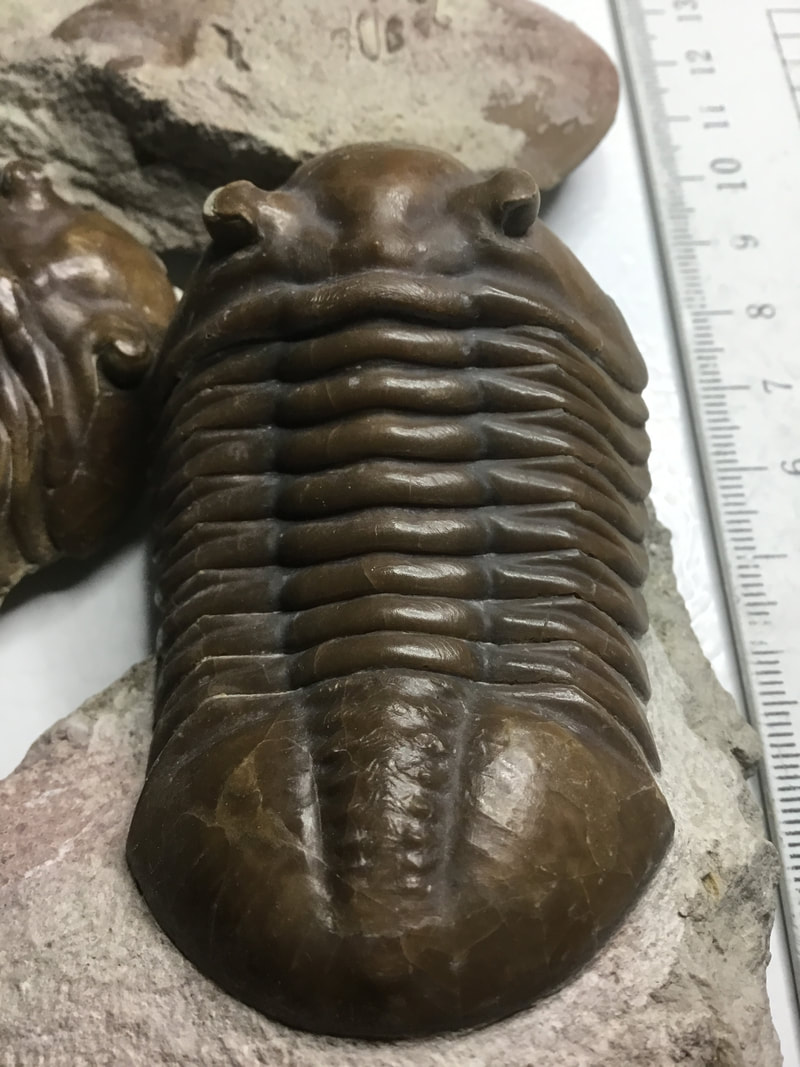 A. robustus 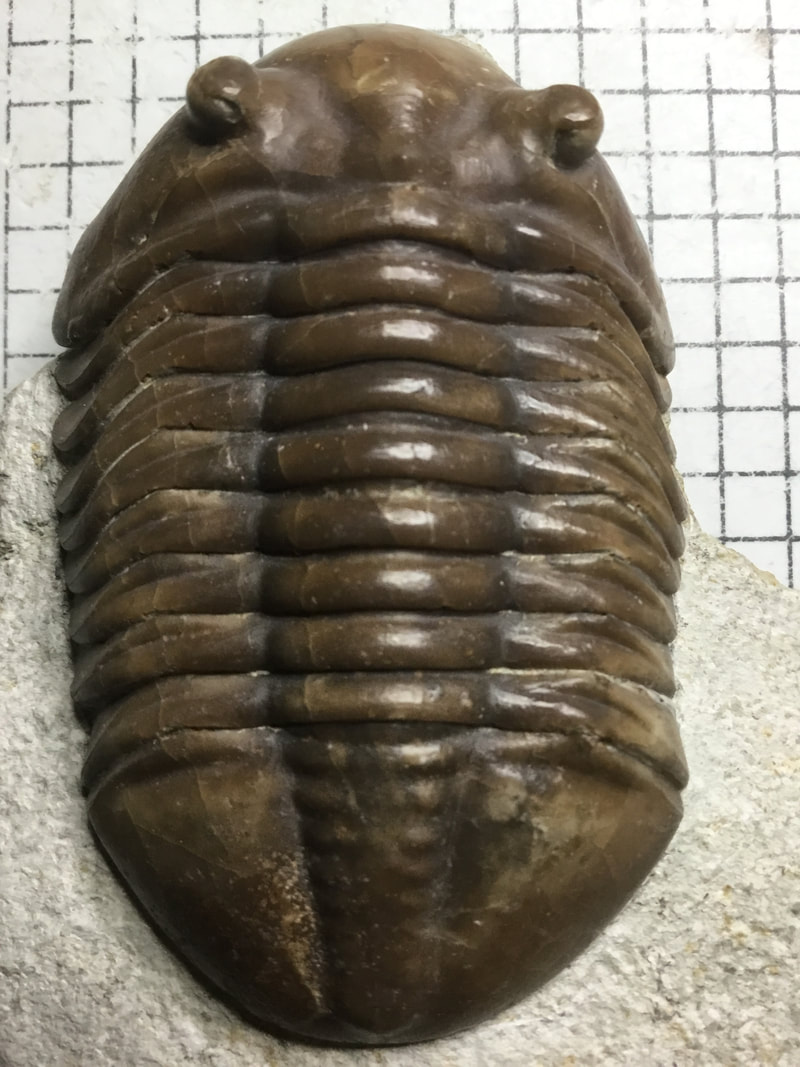 A. expansus gracilis.
I traded some material with a friend on the Fossil Forum and just received an immensely generous package filled with new trilobites that will be added to the gallery. 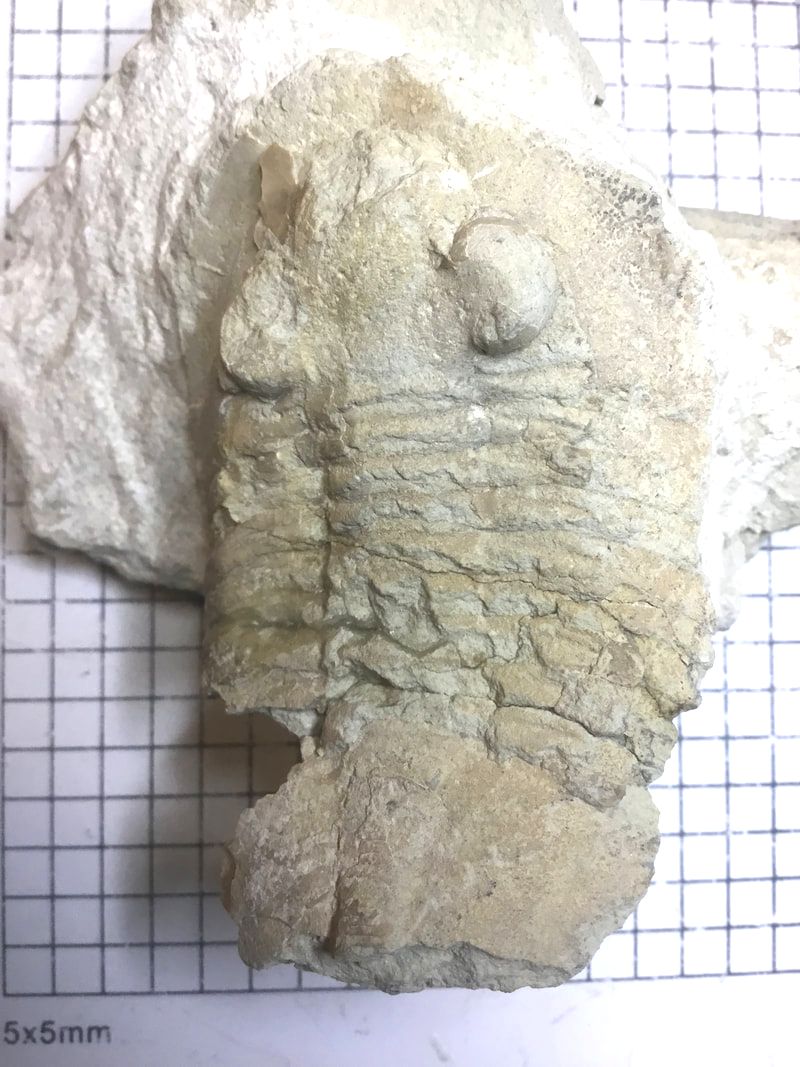 Pseudoasaphinus gosilicyensis - sitting atop a Proterocameroceras mishinagorense. From the Gosilitsy Quarry in Russia. 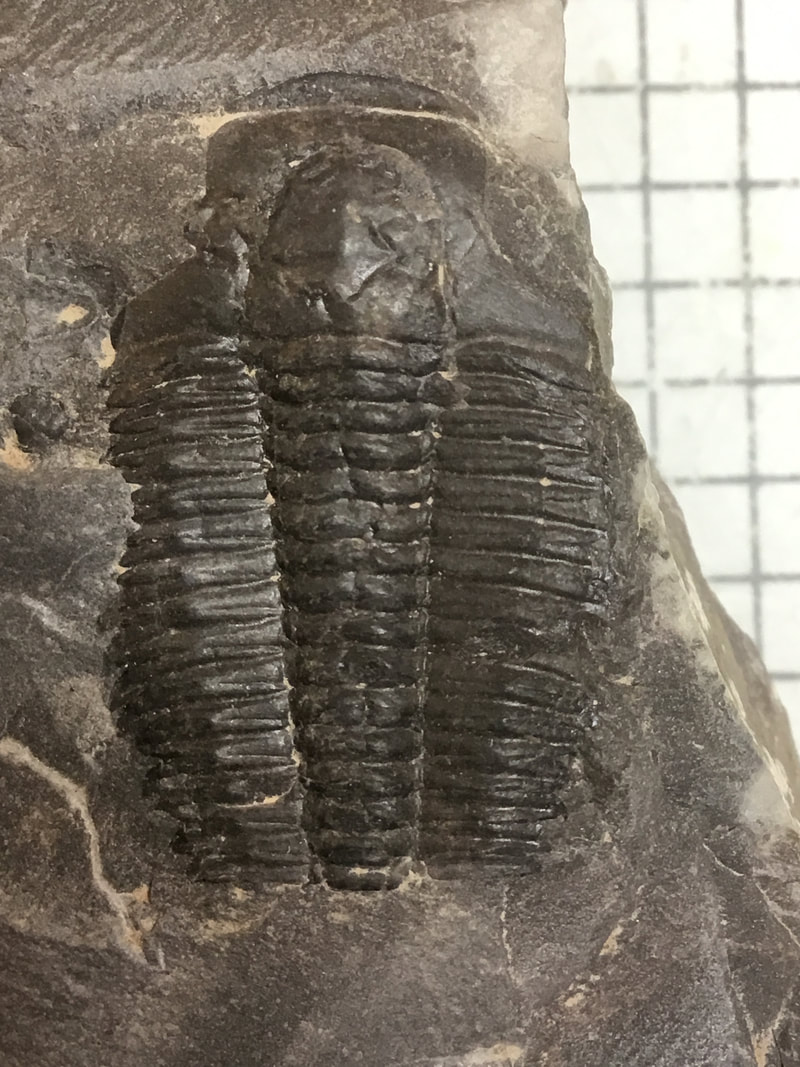 Modocia brevispina - Middle Cambrian, Wheeler shale, Utah 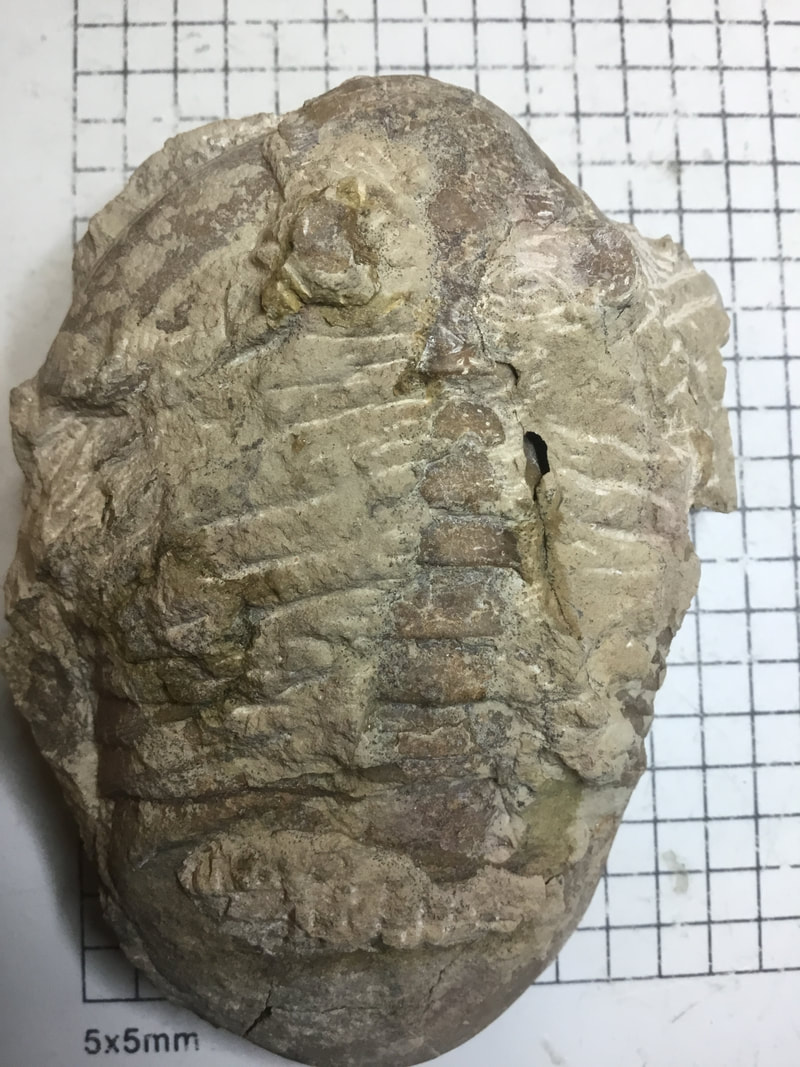 An Asaphus latus for me to prep! From Russia. 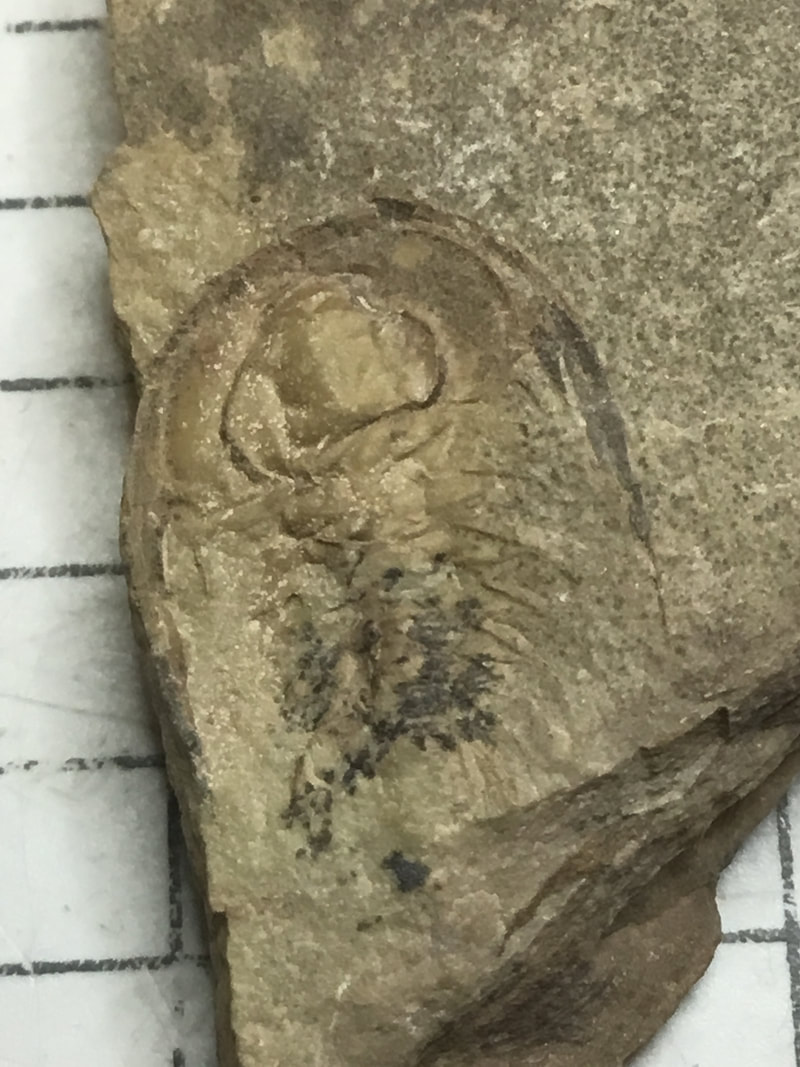 An Olenellus gilberti from the Cambrian. Pioche, Nevada. 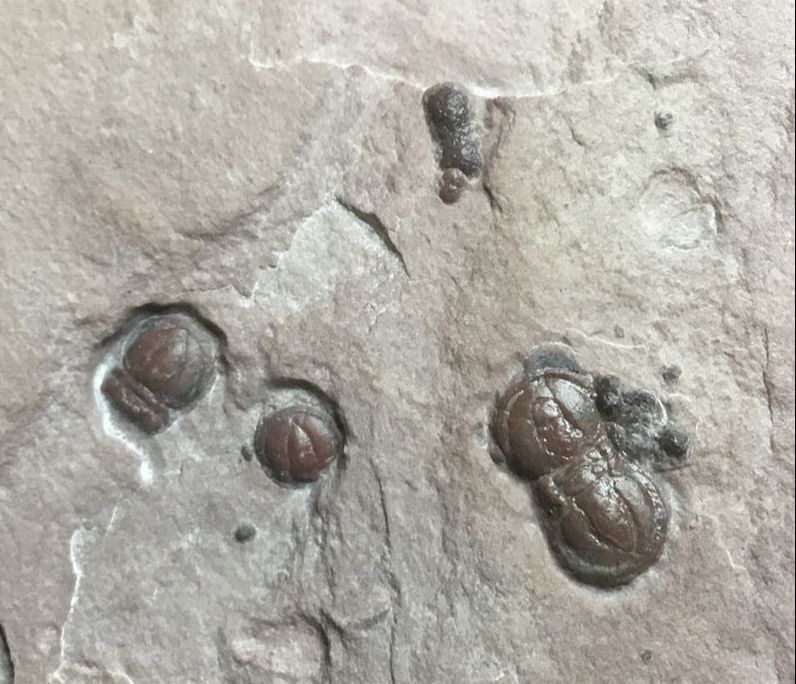 Assemblage of Ptychagnostus richmondensis from the Wheeler shale in Utah. Mid Cambrian. 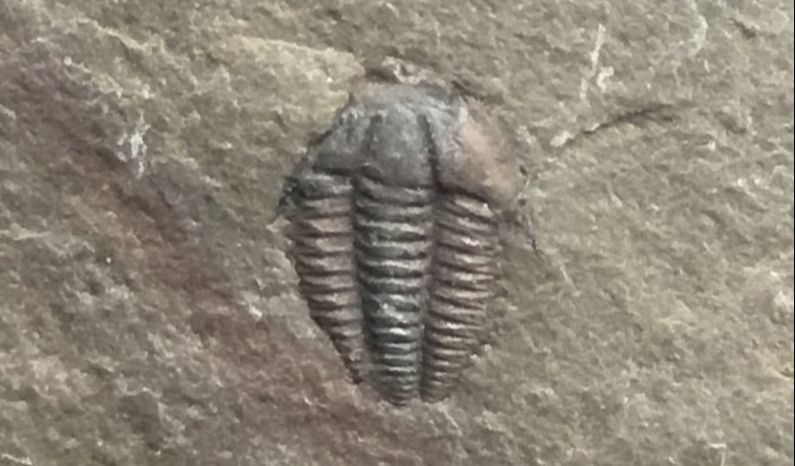 - A Piochaspis sellata from the Chisholm shale of Pioche, Nevada (Cambrian). 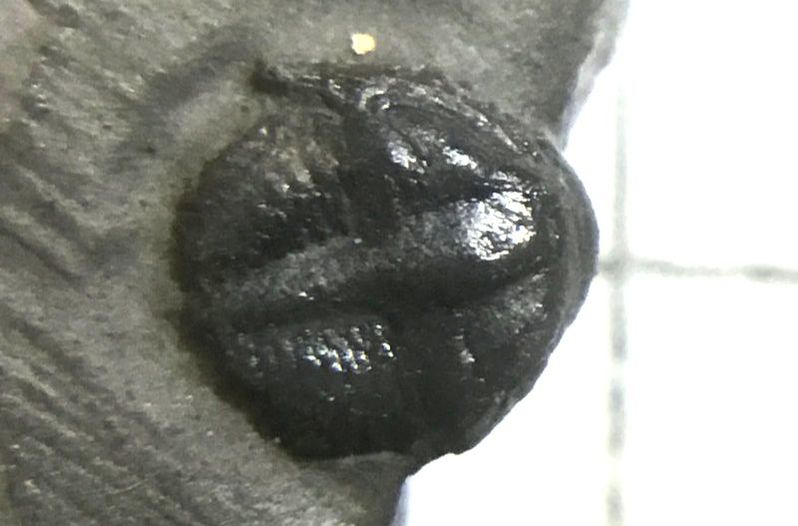 The tiny Bolaspidella housensis from the Wheeler shale of Utah (Cambrian) 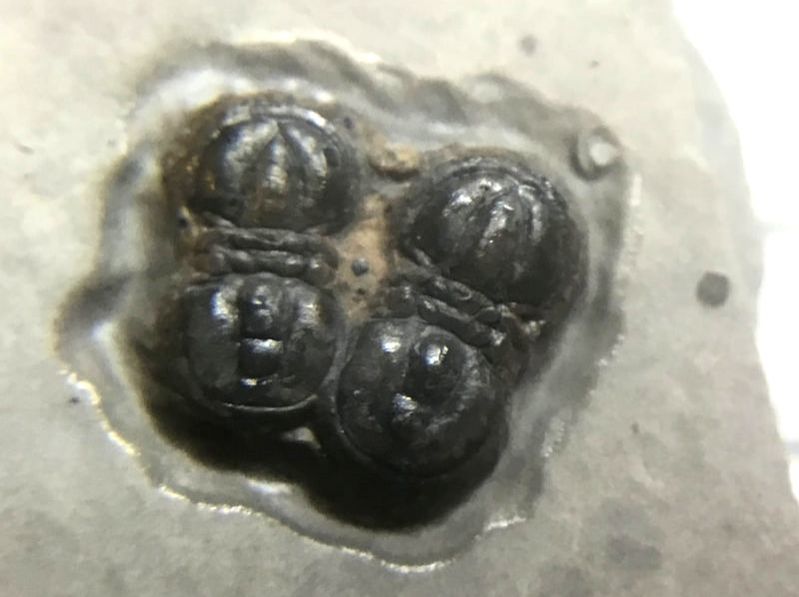 A fabulous pair of Itagnostus interstrictus from Utah's Wheeler shale (Cambrian) 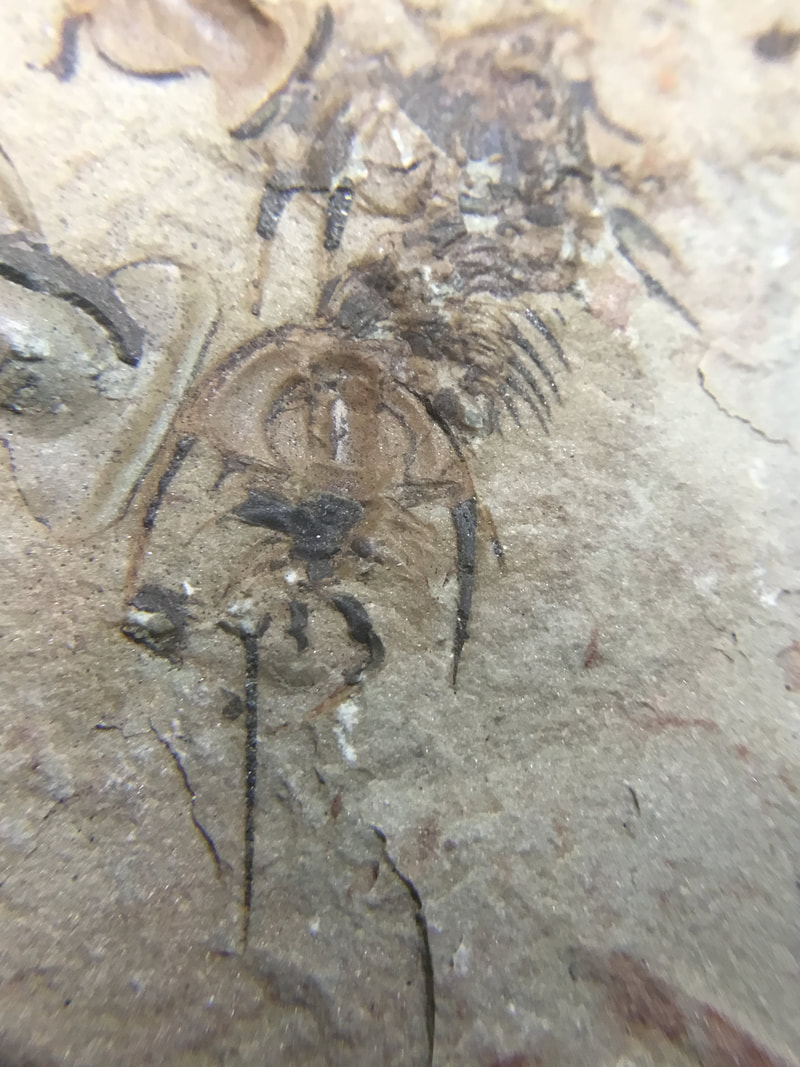 The very last on my list, alphabetically, Zacanthoides sp. (?typicalis). Cambrian, Pioche, Nevada. 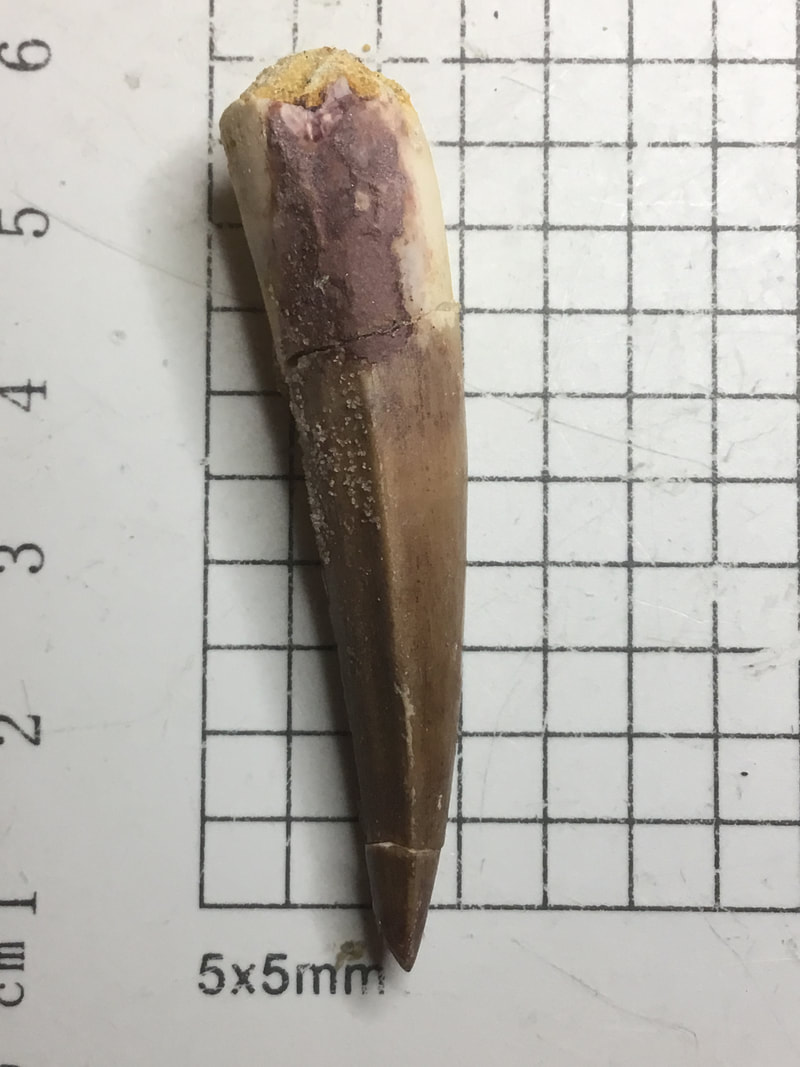 A complete surprise (apart from all the surprise new specimens above!), a genuine Spinosaurus tooth! 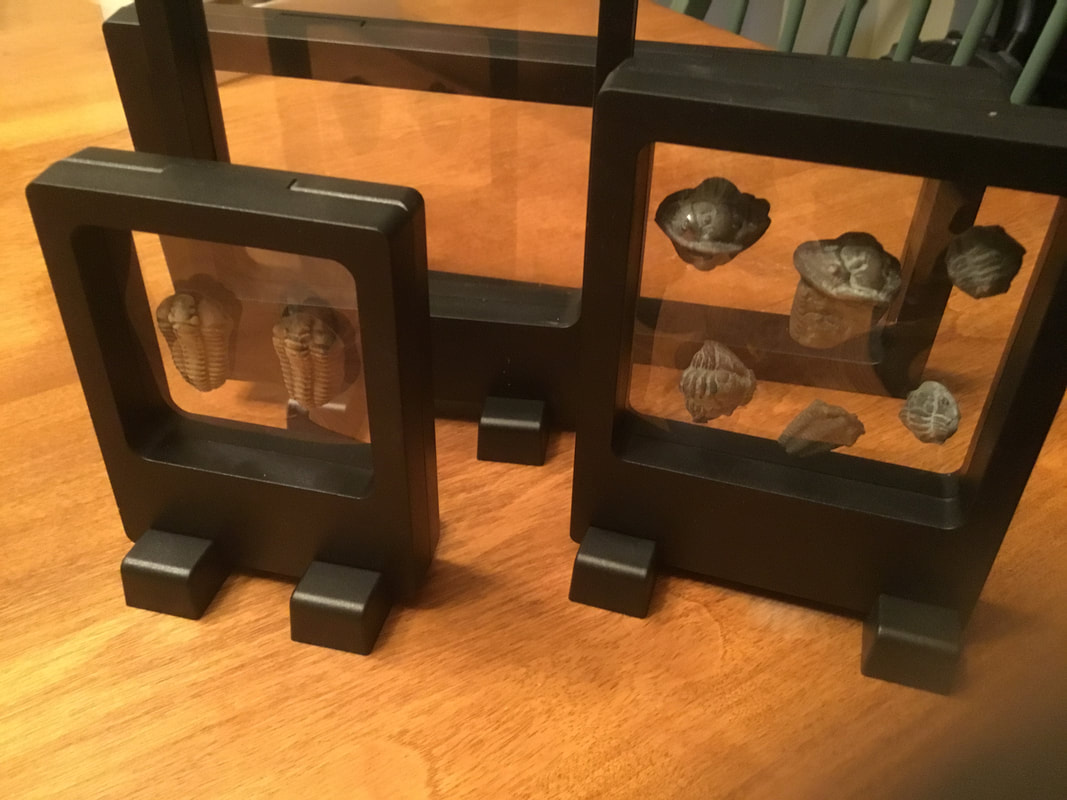 I ordered these cool membrane frames for cheap online, and that will help fill this: 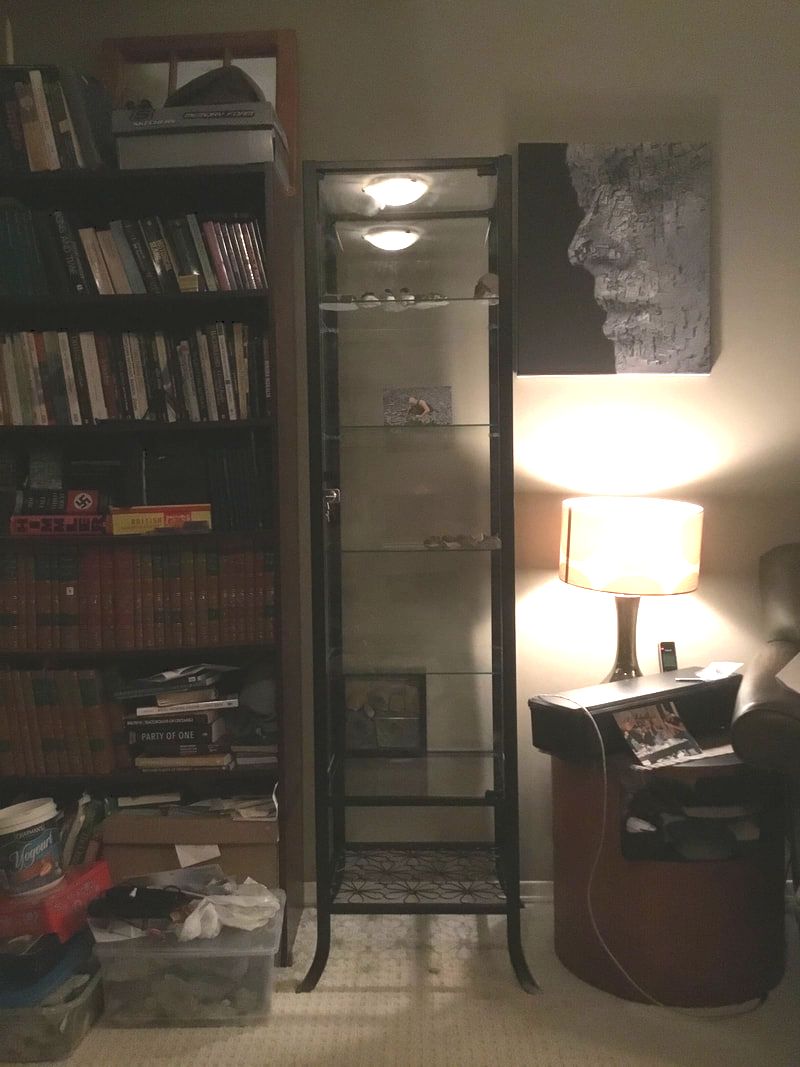 Deb's birthday present to me, a lovely glass display cabinet to host all my lovely trilobites!
So, wow, what a great haul today! Despite some flirtation with the freezing mark the past few days that is looking to put my Friday trip to Arkona on hold, on the whole spring is definitely showing itself. This one is just a short post to highlight some river finds, and show off my newest Russian asaphid. UPDATE: actually, two. NEAR: 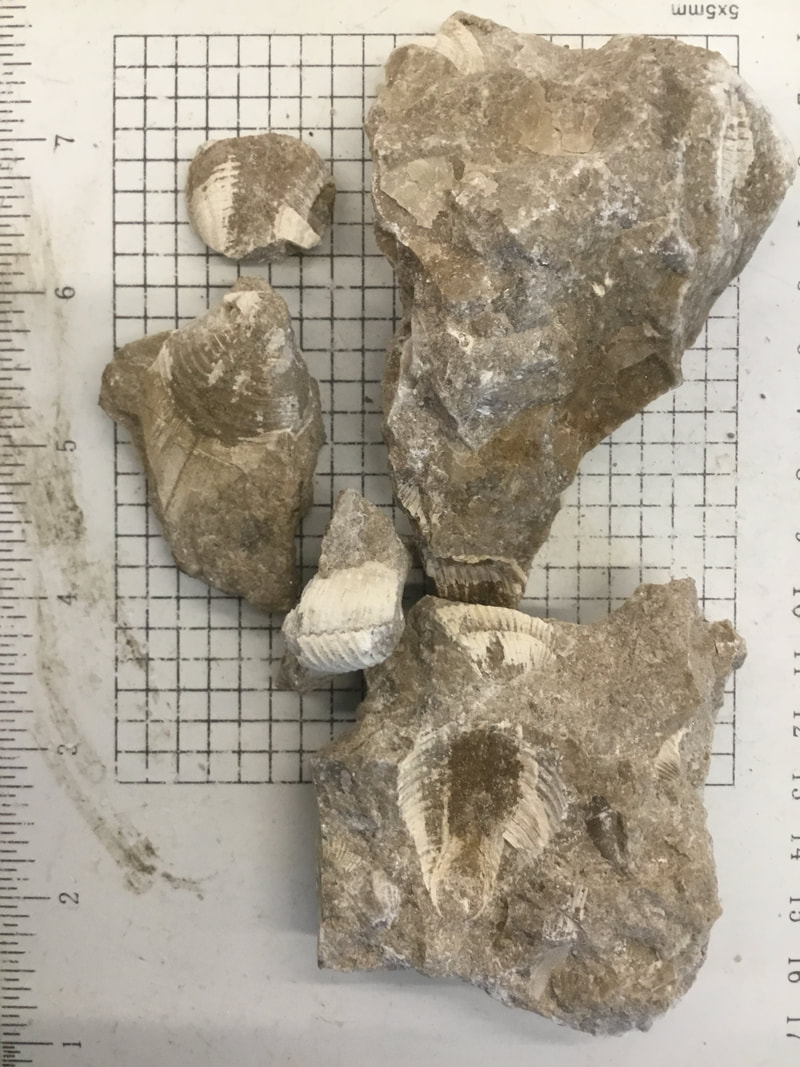 On Monday I went back to the river on campus, remembering this time to bring my trusty rock hammer. There was not much to be had among the dull, plain, river-worn rock and the plentiful limestone only filled with tiny shell hash, but closer to the end of my time there before having to teach, I pulled out these odd beasts. Once I got confirmation of what they were, and that they are somewhat rare, I went back to collect the rest the next morning. So what are they? I've seen these before and just dismissed them as some kind of wacky brachiopod. Not so! They are somewhat related to bivalves but occupy a place all their own as being rostroconches. These planktic, valved creatures would more resemble a taco than a clam. Their hinges are somewhat weak, and they have a long rostrum (the piece on the far left, centre shows it best - the striations that appear like someone scraped it). Looking at the comparable species in the general strata, it may be a Conocardium cuneus. It is a first for me ... at least the first time I've kept one. It was interesting to learn that finding these is far from common, and yet I pulled all of this from a single rock. FAR: 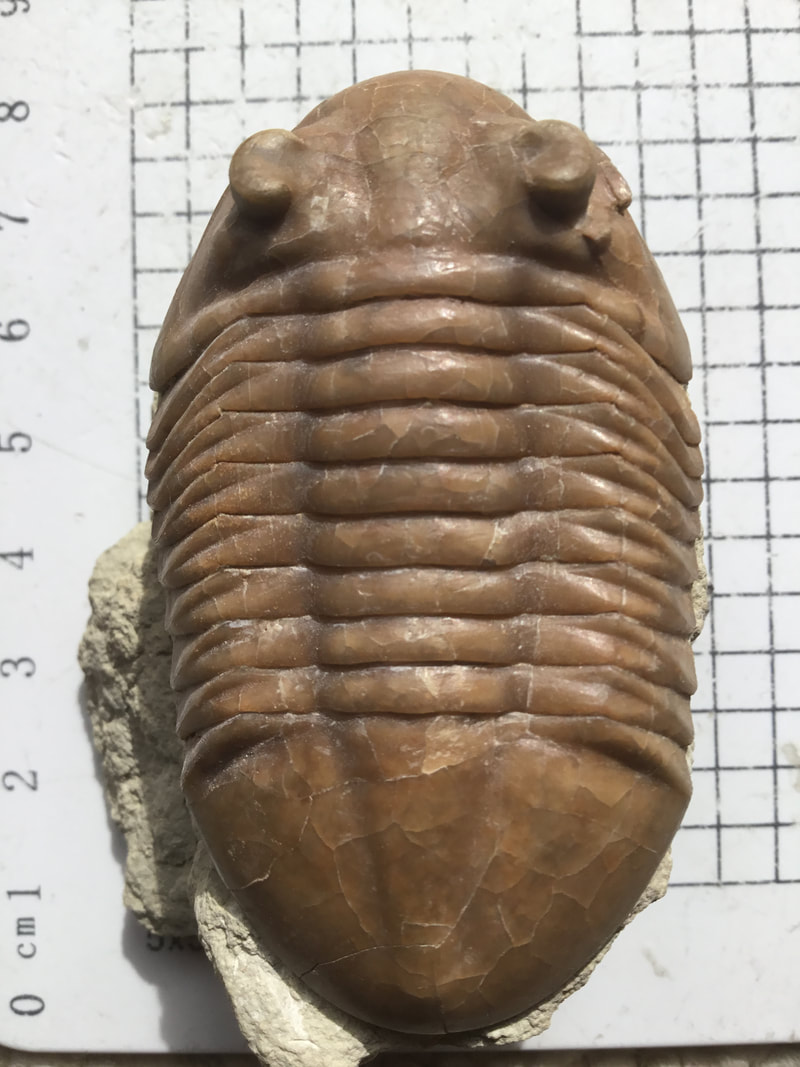 This is another lovely Russian asaphid, the fifth that has arrived in my collection, and with five more to come. This would be a nice, prone Asaphus plautini from the Mid-Ordovician, Aseri Stage, collected from the Gostilitsy Quarry near St Petersburg, Russia. It is about 62 mm long, so about average for this species. Here is the evolutionary sequence chart from thefossilmuseum.net: 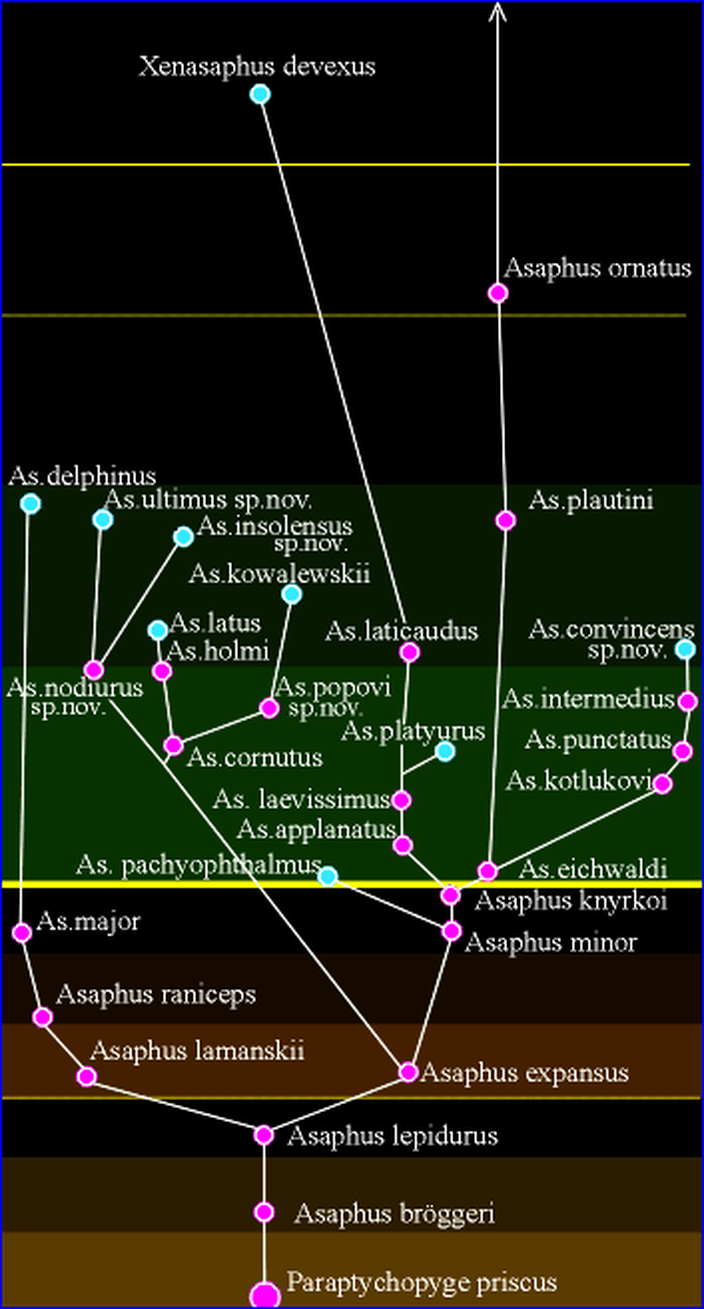 But wait, there's more! Today I welcome species #6 to the family, Asaphus kotlukovi: 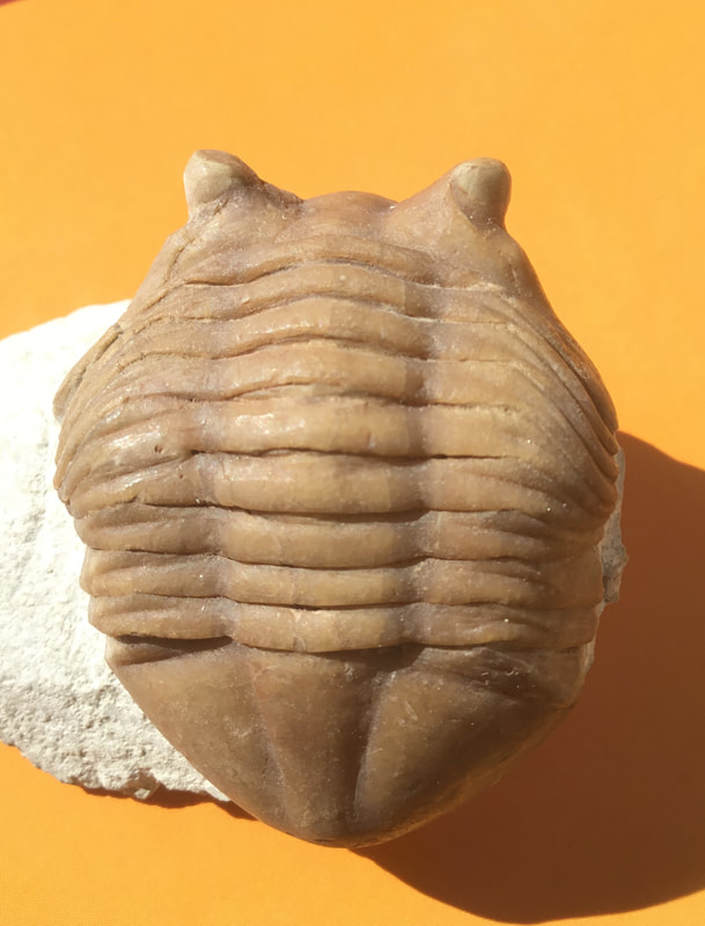
Just a post on a very brief (2 hour) trip out near my house on a sunny, Sunday morning. 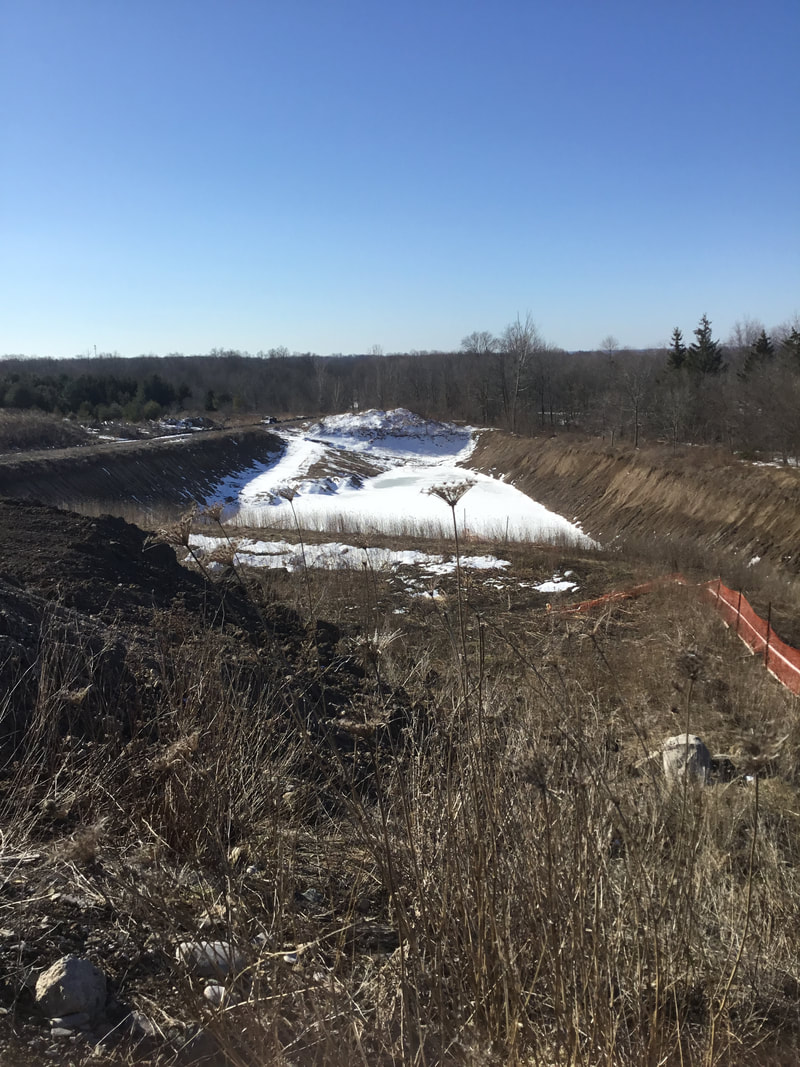 This time around, I'll be keeping to the hills as it is pretty clear that the pit area has a bit too much snow still. I started off while the ground was frozen, and ended when it thawed and got muddy. 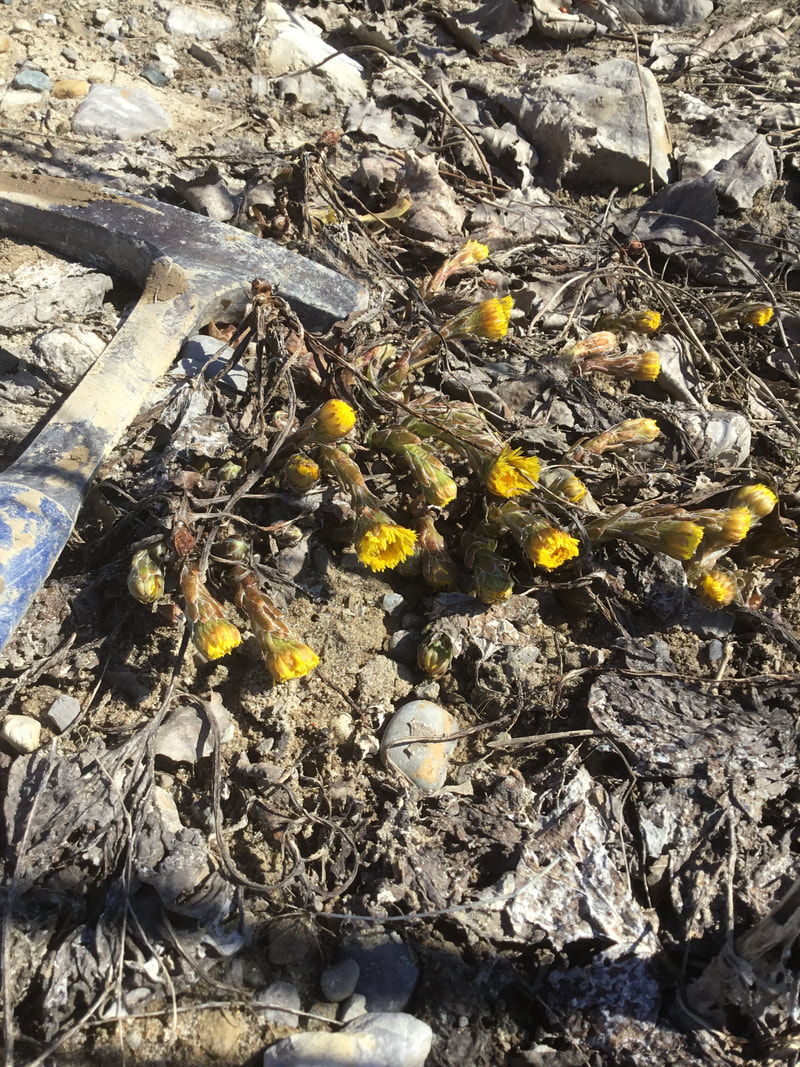 A small gathering of Colt's Foot (Tussilago farfara), which resemble dandelions, and are usually the first plants around here to sprout before spring begins in earnest. I only found a few clusters on the hills, but by the end of the week they will have spread all over. 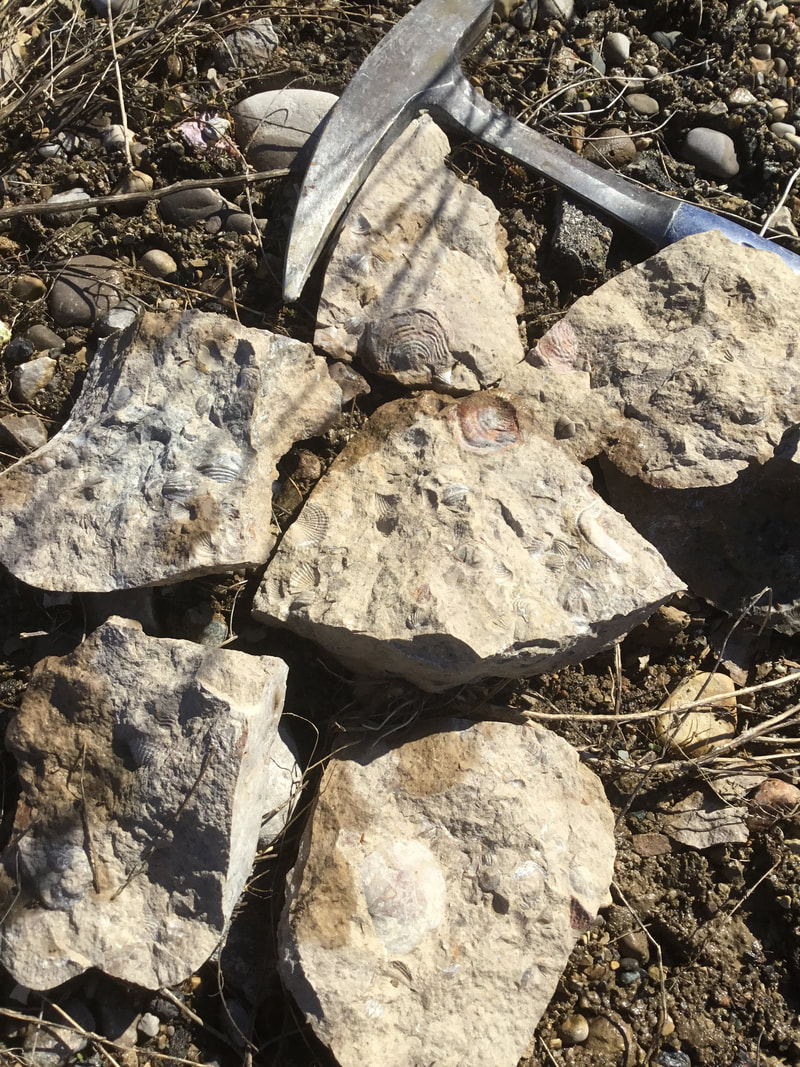 Fairly typical brachiopod hash, including strophomenids, spirifers, and Leptaena sp. These rocks are a mix of three low-mid Devonian formations. 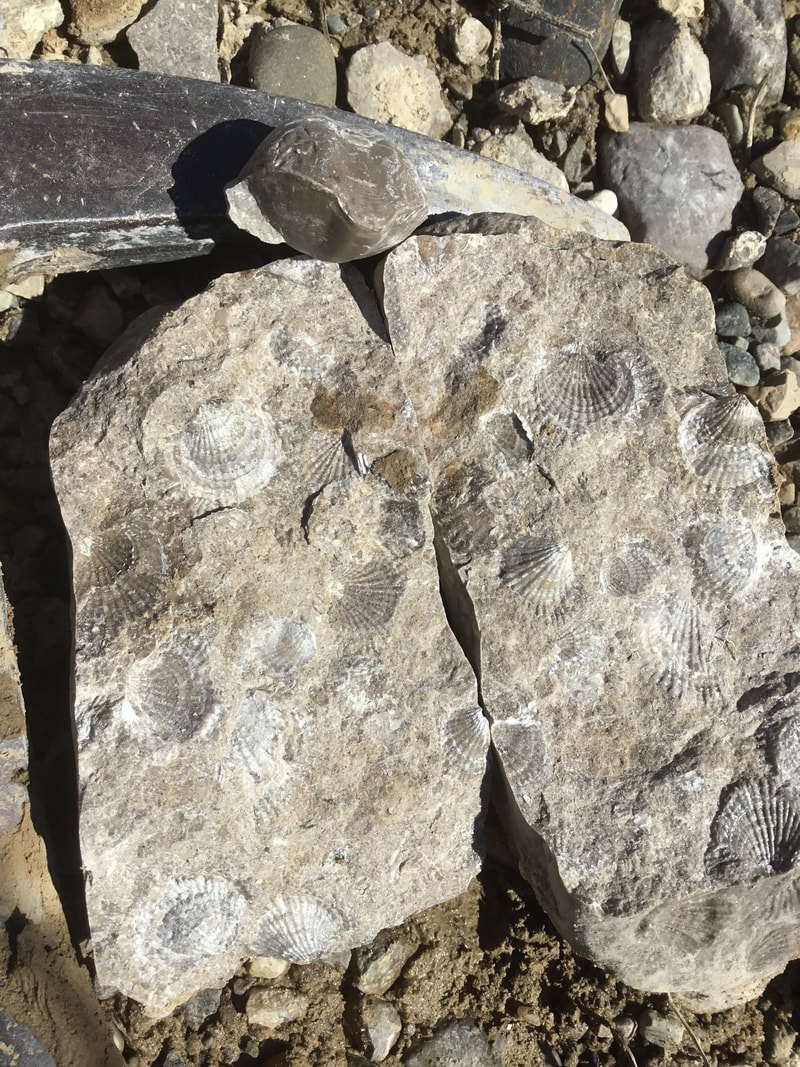 More (shiny) brachs. On my hammer is a fully inflated brach. 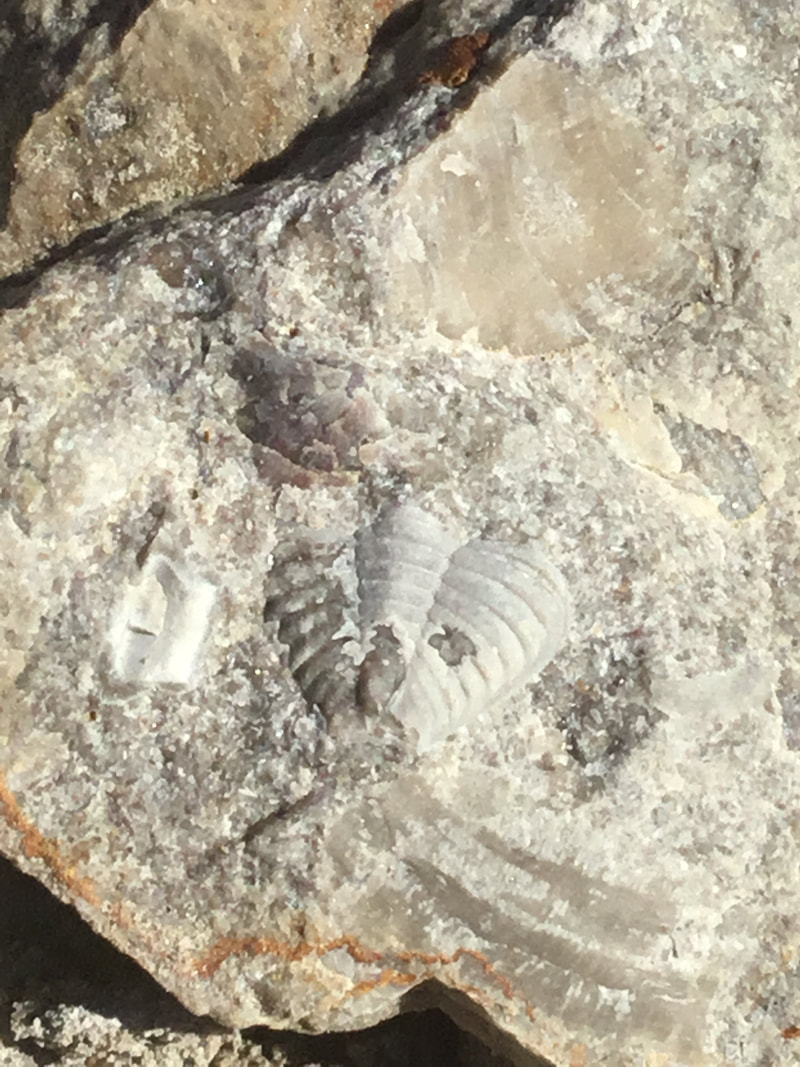 My real goal was to find my first trilobite of the season. Fragments are really all that is on offer at this location, but here is one a few Anchiopsis anchiops pieces that I found. 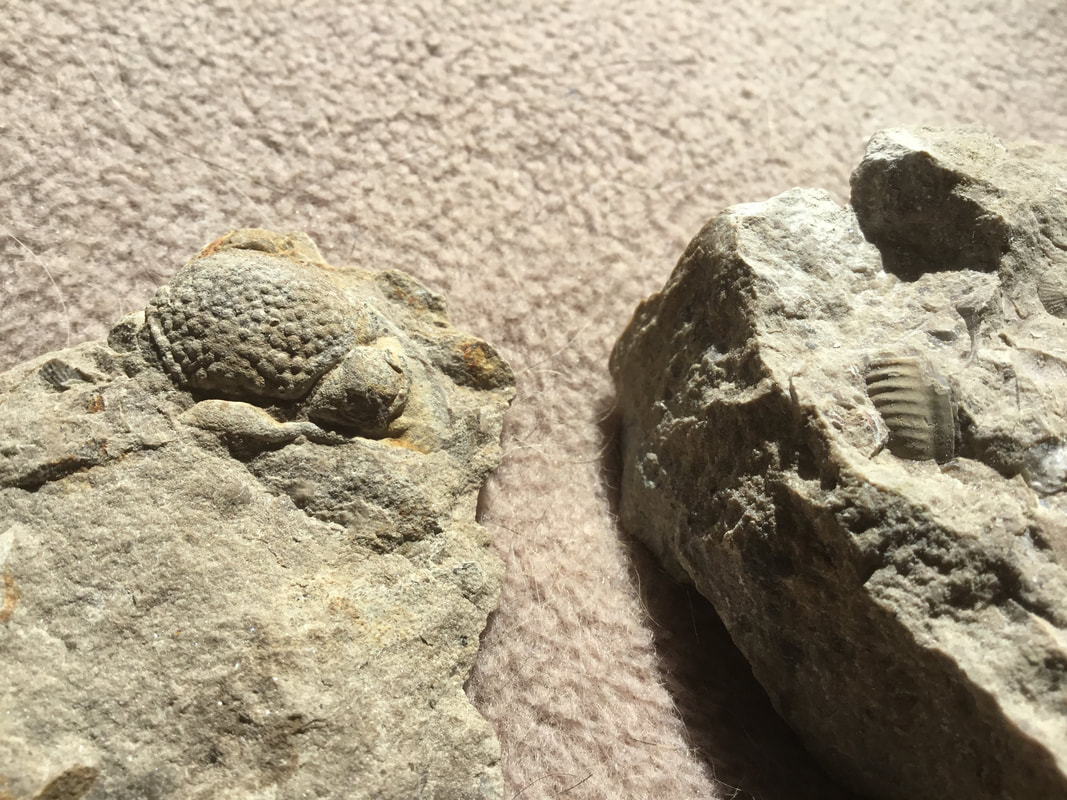 On the left is a phacopid cephalon fragment (E. rana, possibly), but it appeared on the same rock as an impression of an Anchiopsis pygidium. Geologically a bit confusing! On the right is a tucked in pygidium fragment of a Pseudodechenella. 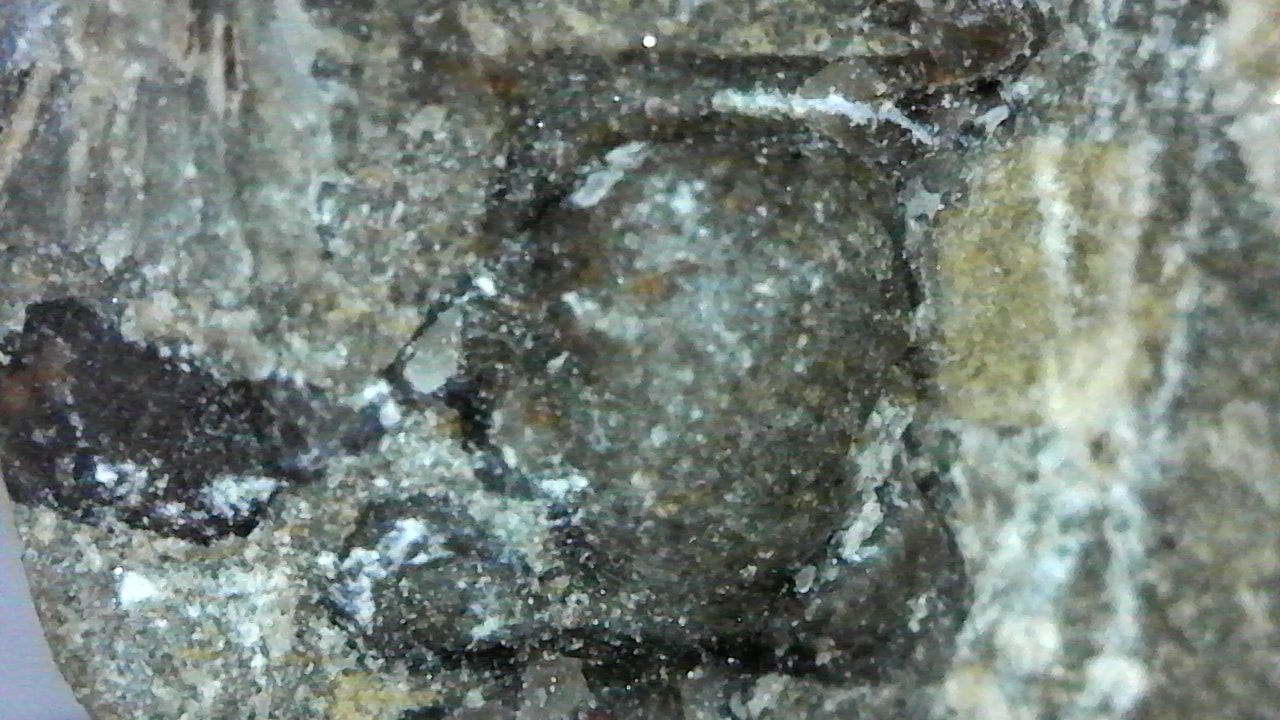 This is a new one for me. Under magnification, the glabella of a calymenid, about 3 mm long. I know Calymene is reported in the Bois Blanc Formation, but I'm going to have to double check my literature to pinpoint this much better.
Lots of other little finds I didn't take pictures of, but not a bad little first almost-spring outing. Friends, colleagues, and students occasionally ask me about what I get up to on these fossil trips. Explaining the processes, and showing images of my finds, seems to answer many of those questions. However, what is lacking is that context of seeing me in that element. So focused as I am on taking photos of a site and its fossils that I never really think to turn the camera back at the less important subject of the guy who bashes the rocks. For that, I can only rely on candid shots taken by others. In this short post, a slideshow of yours truly in his preferred element outside the classroom. Many of these photos were taken by Deb, but a few of them by others. Some include group shots of field comrades. The areas are from all over: Arkona, Penn Dixie, Brechin, etc. I received a piece of limestone matrix from a quarry near St Petersburg containing an asaphid trilobite. I'm giving it a go. Not complete, but pictures of the progress thus far. 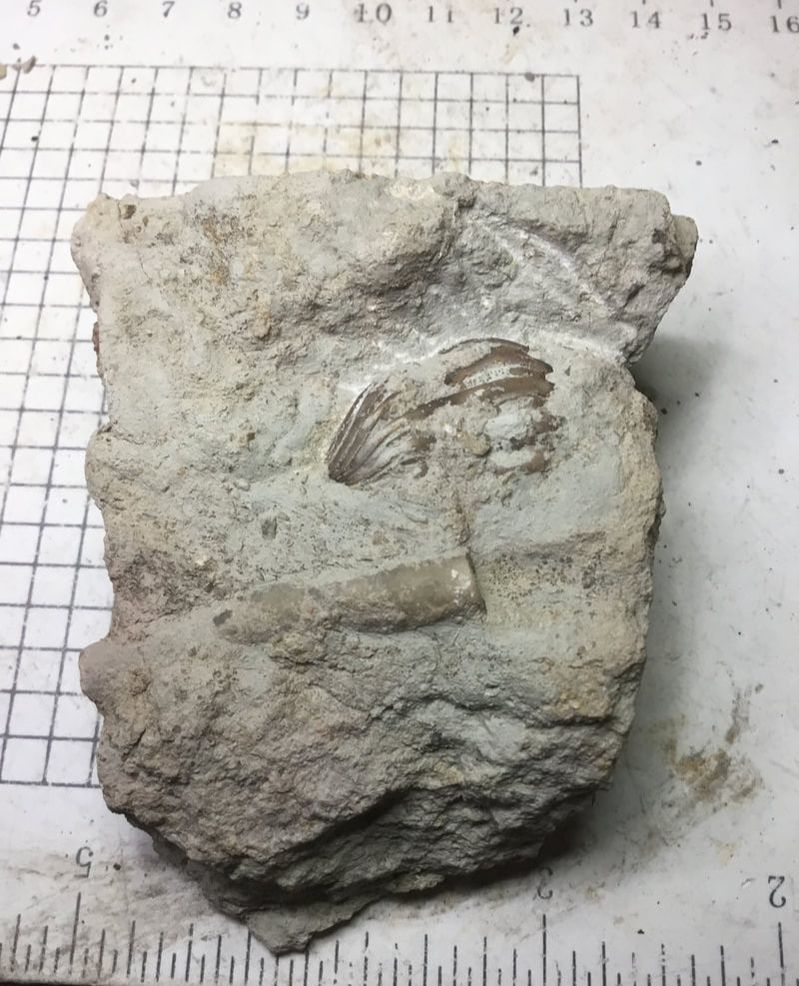 The initial state of the matrix above. 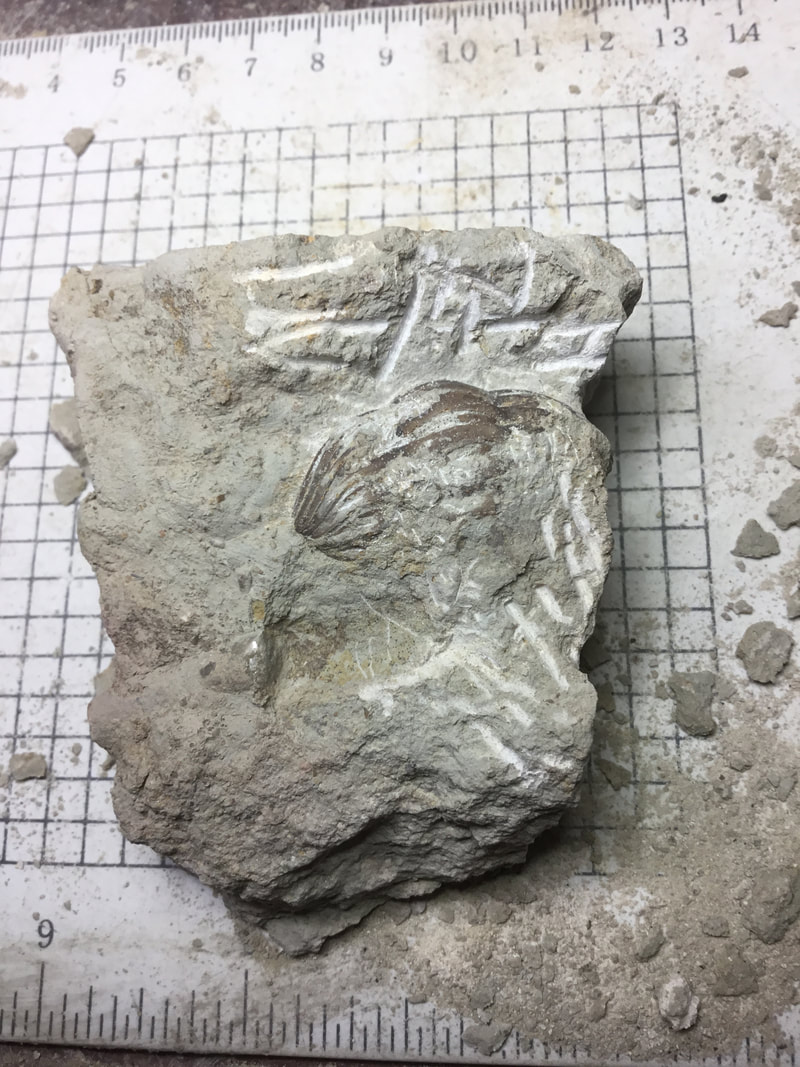 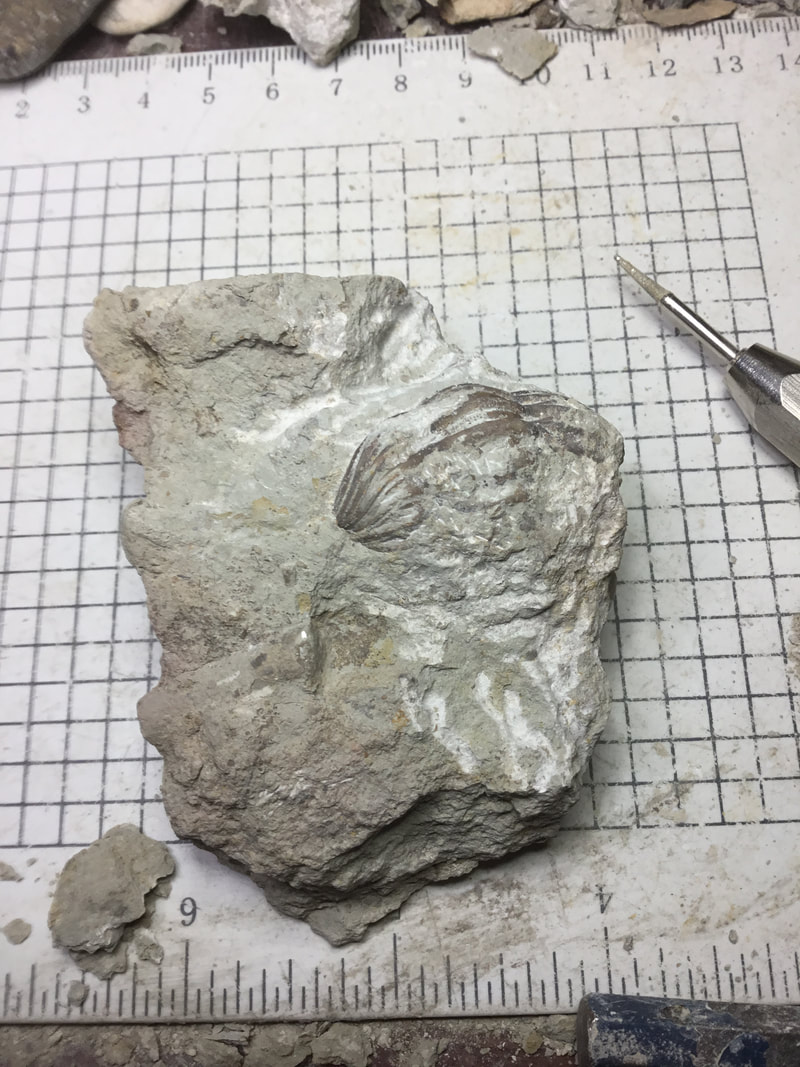 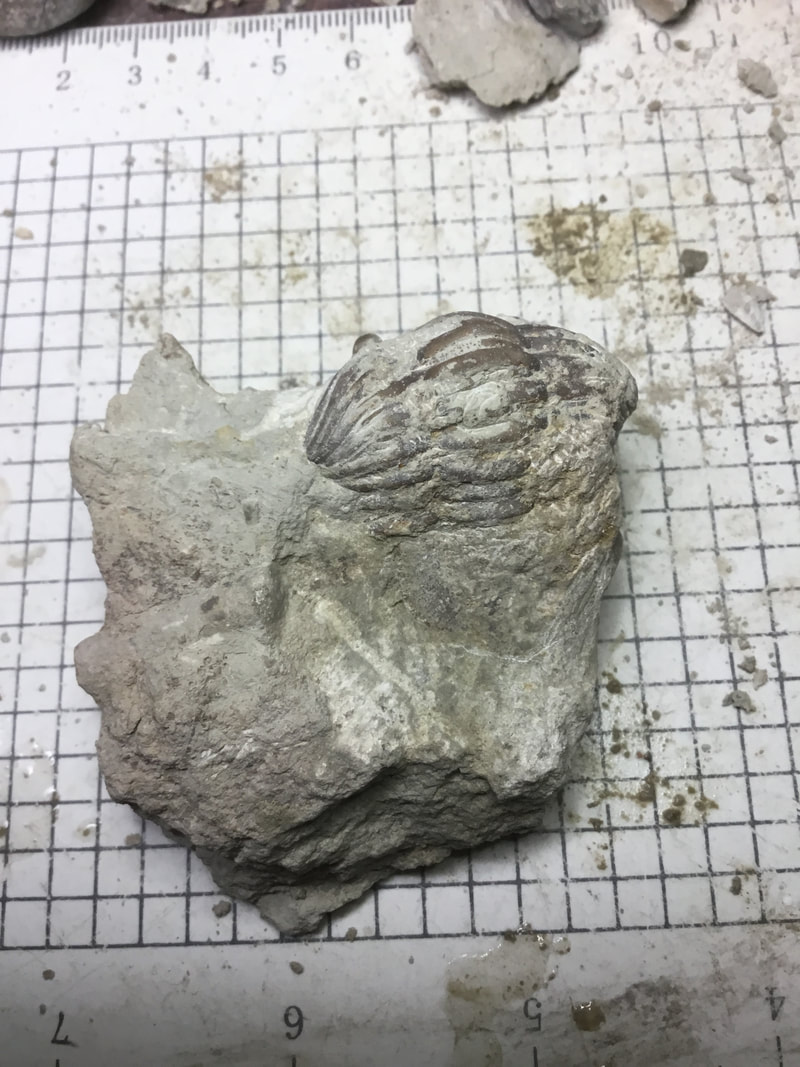 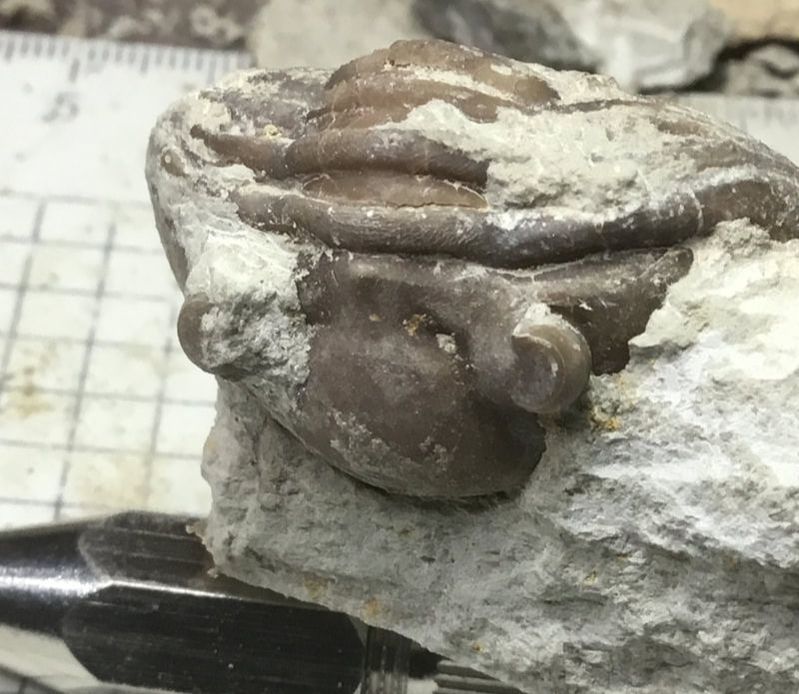 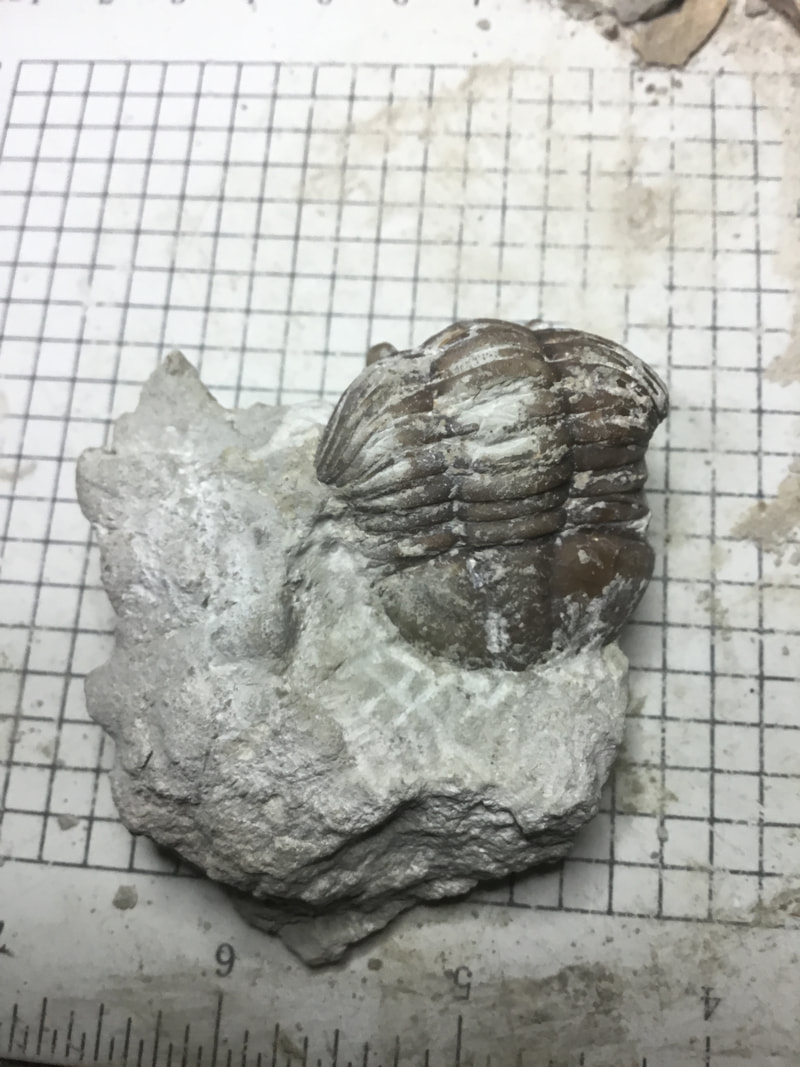 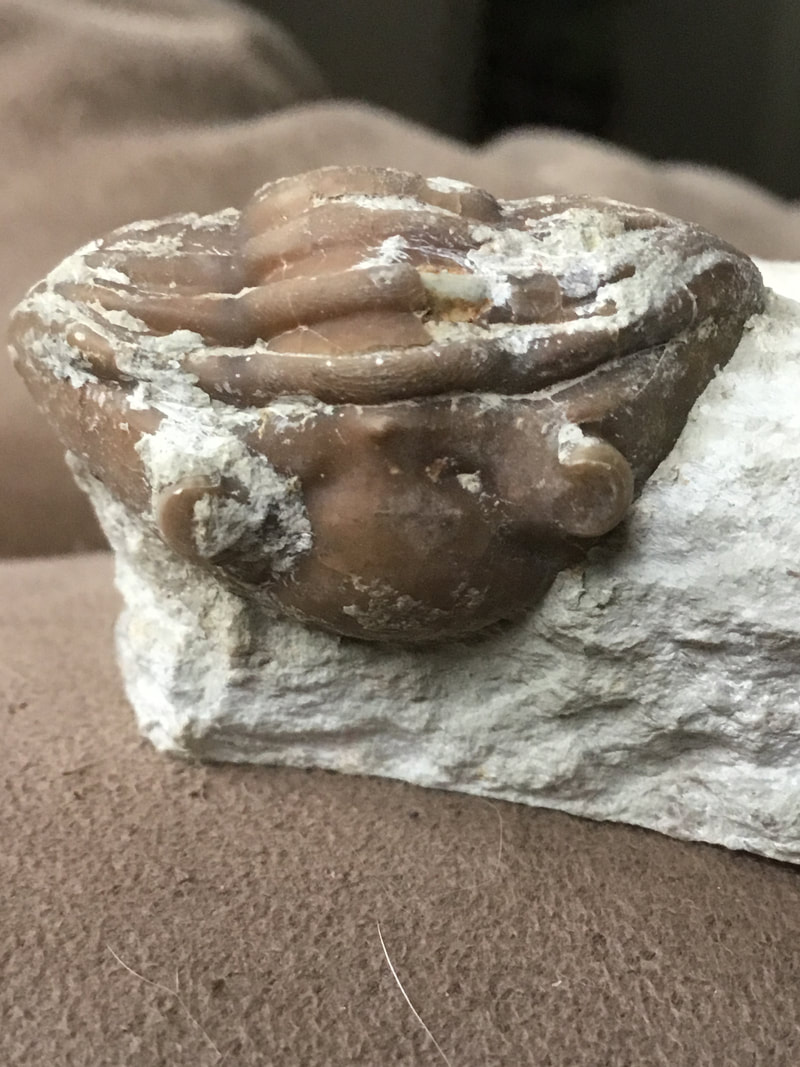 This one has been a bit of a challenge. A lot of the matrix is nice and soft, but there are "sticky" bits. I knew that the piece was not going to be museum quality, so I expected there to be a bit of damage. The thoracic area at the axis was already missing some shell, so I was not surprised when uncovering the rest that it would be missing. Unfortunately, I don't have any spare pieces of this to attempt a minor restoration. I did goof in one area, breaking off a bit of the shell. After uncovering the bulk matrix and performing some pin prep, I stabilized some areas with crazy glue, used the air abrader, and then brushed acetone on it to remove the gobs of glue. A few more pin prep attempts and I think this will have to be about it: 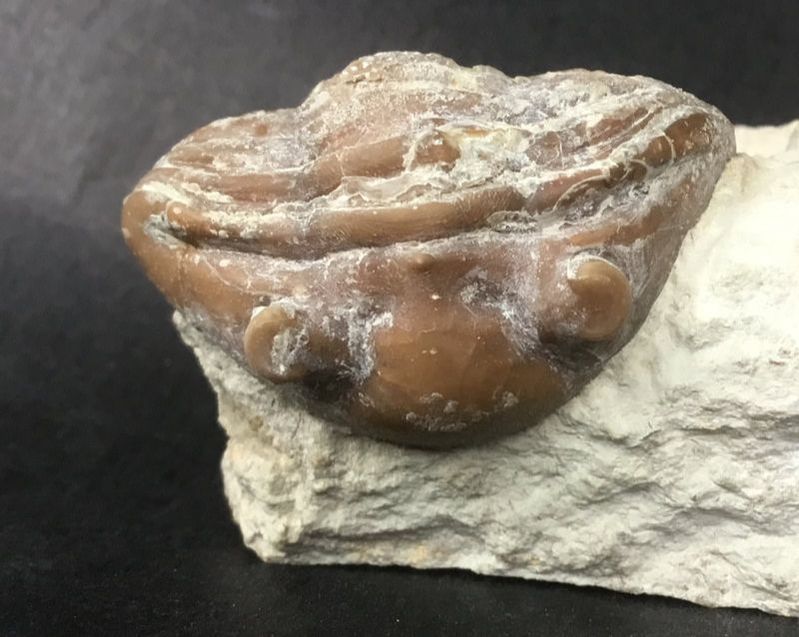 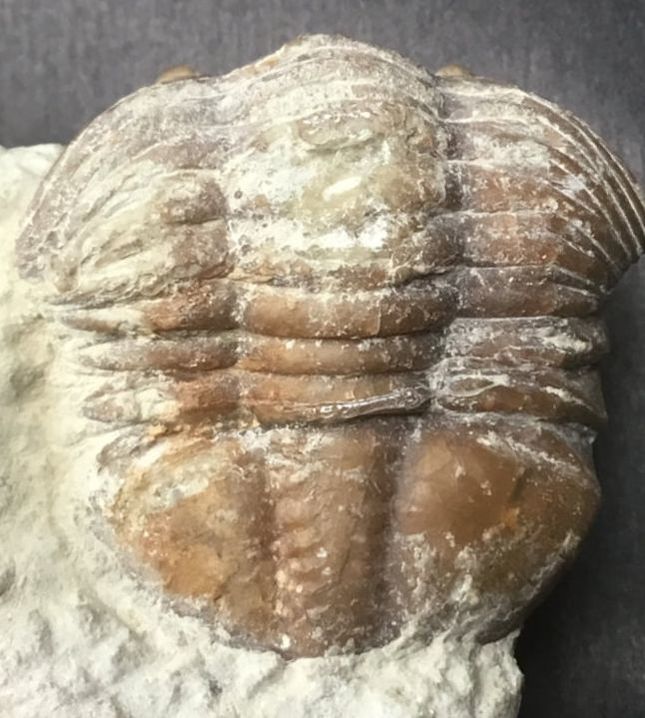 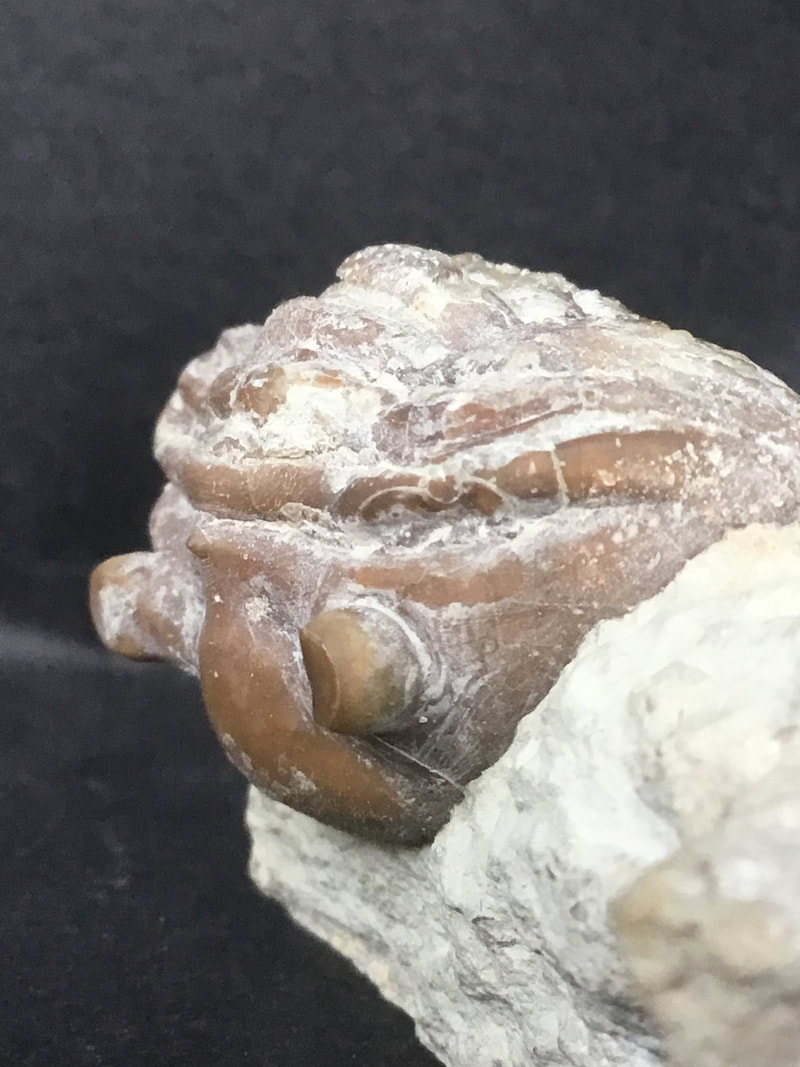 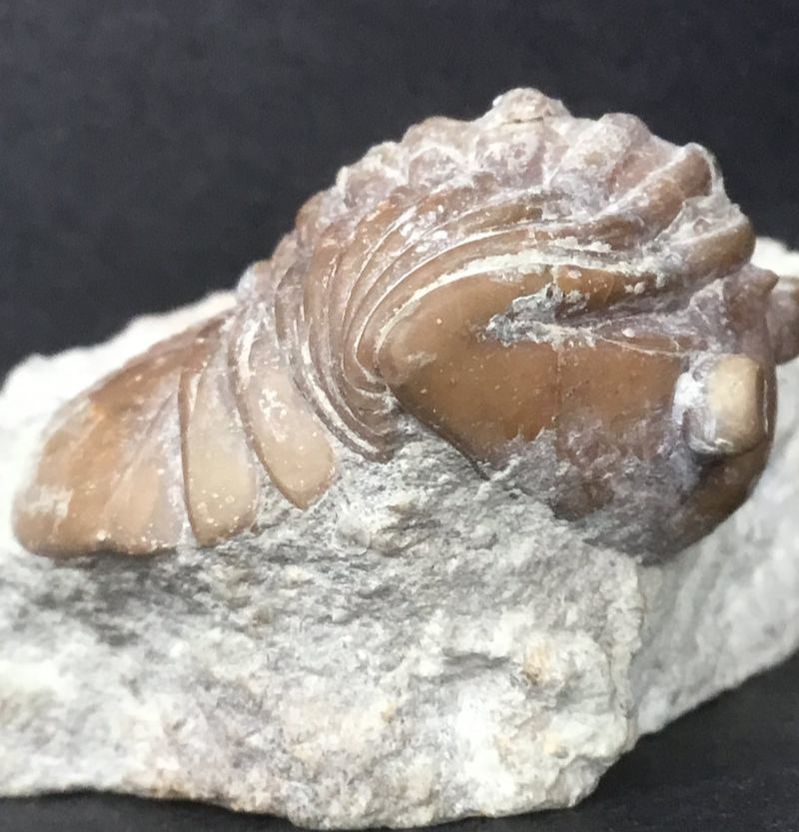 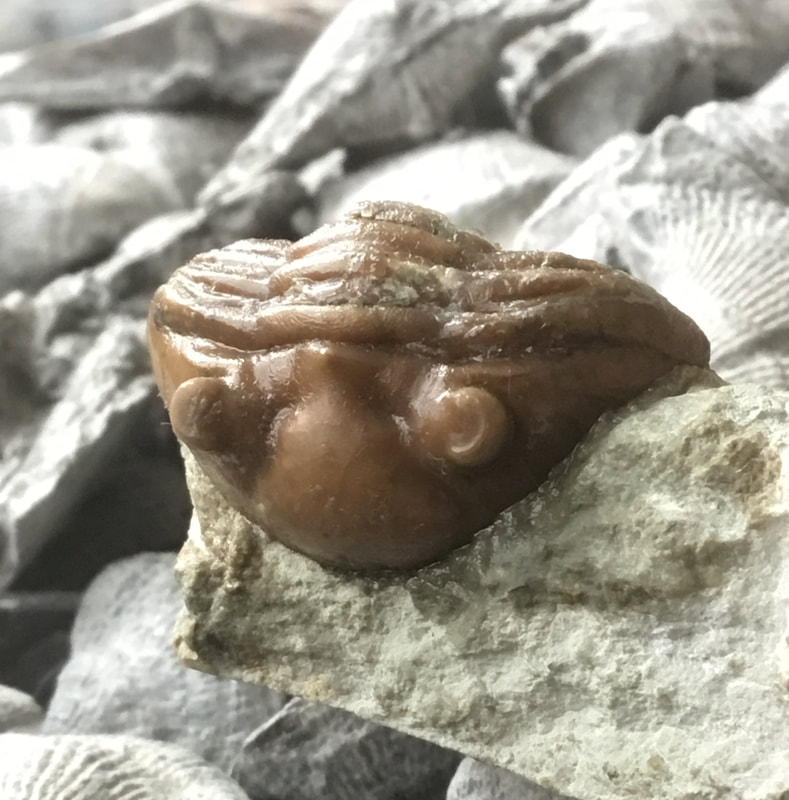 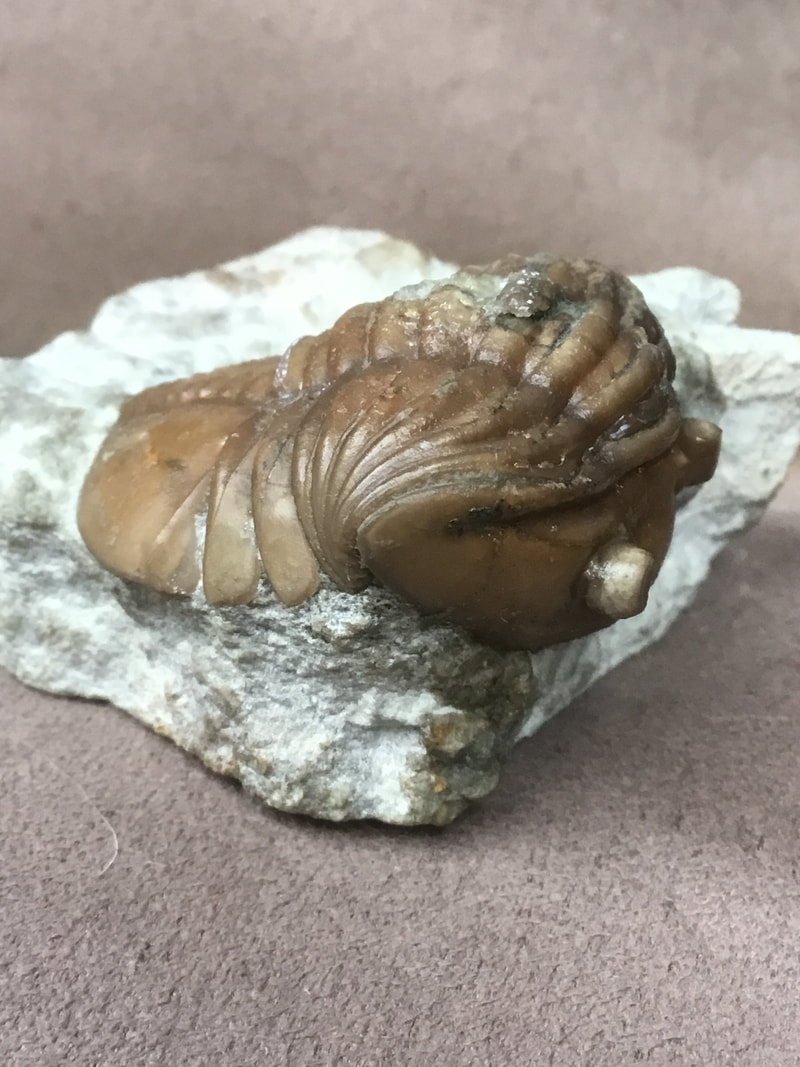 I took some time to walk along the river on campus. The river levels have receded significantly since the heavy rains and snow melt of more than a week ago. 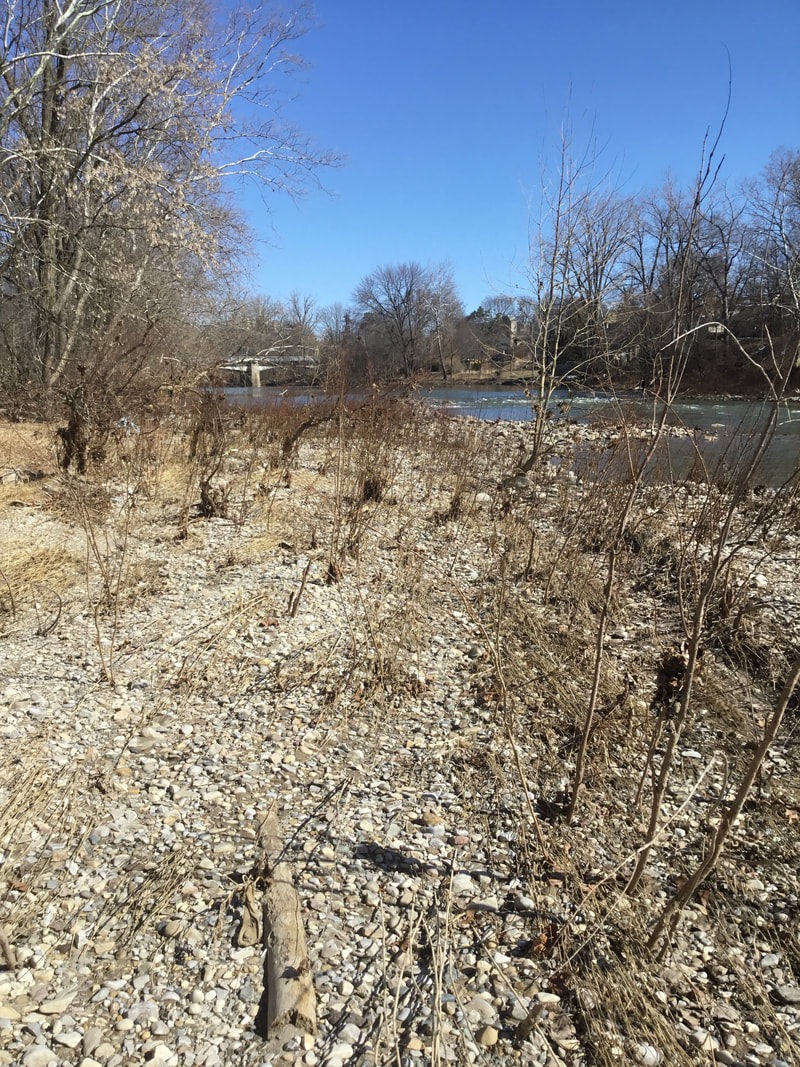 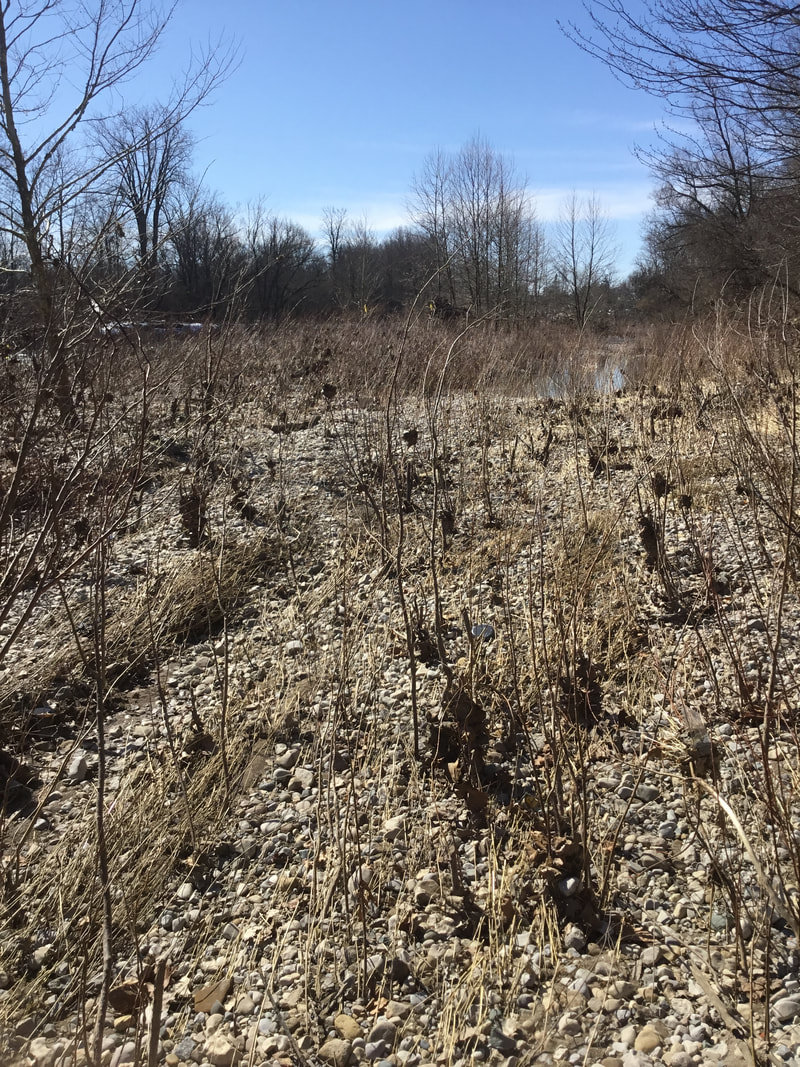 What the area looks like now that the floodwaters have receded. Plenty of transported river debris, mostly local area (Dundee) limestone, but also glacial till and other things. 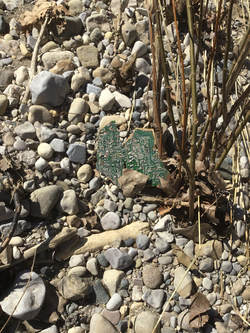 Fossil Computer. 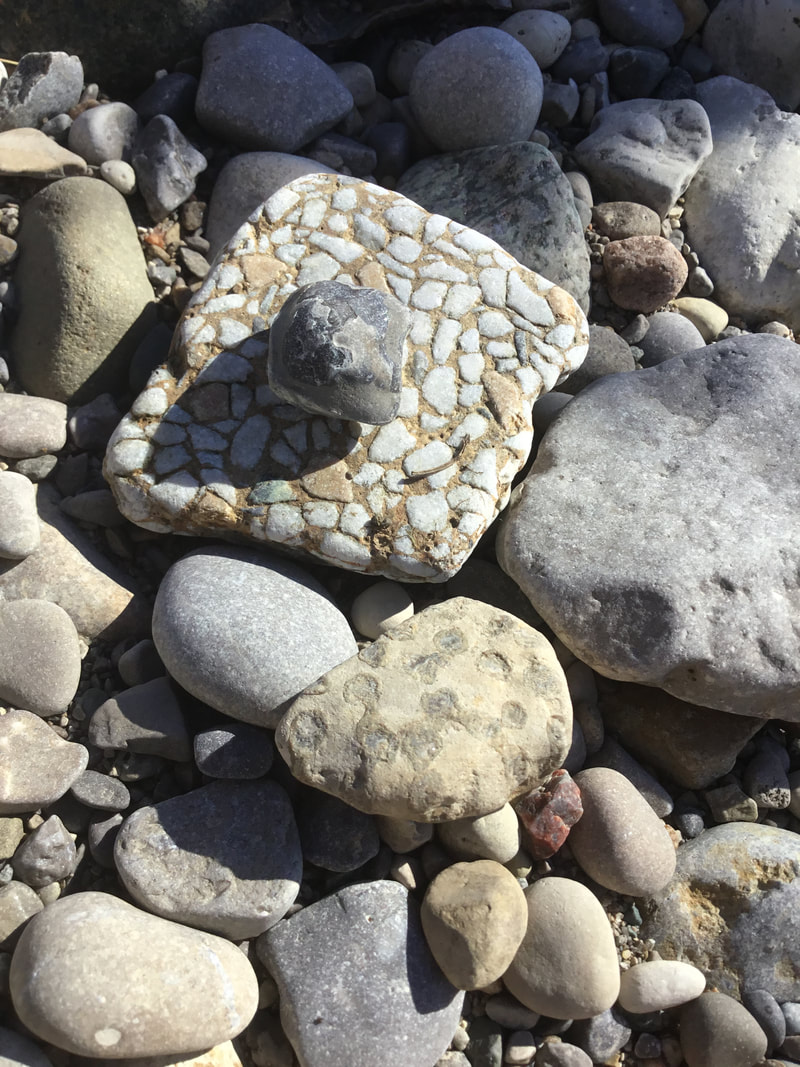 A brachiopod on a piece of old flooring, and a coral. Plenty of coral pieces (colonial and horn) to be found. 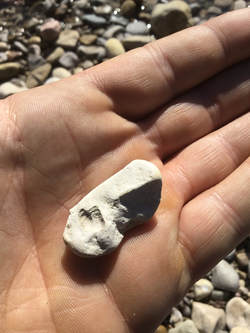 Trilobite fragment impression 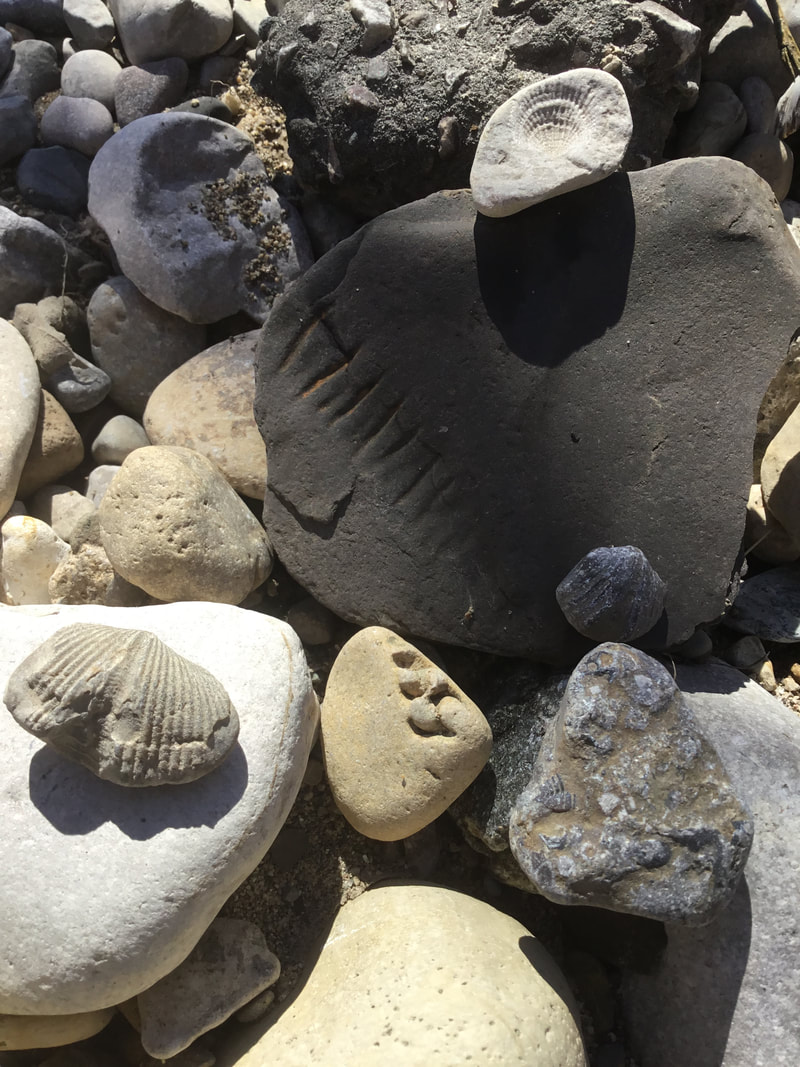 Brachiopod impression at the top. Below that an interesting trace/impression on black shale. From left to right at the bottom: water worn spirifer, high-spired gastropod steinkern, and a small hash containing a fragmentary trilobite pygidium. 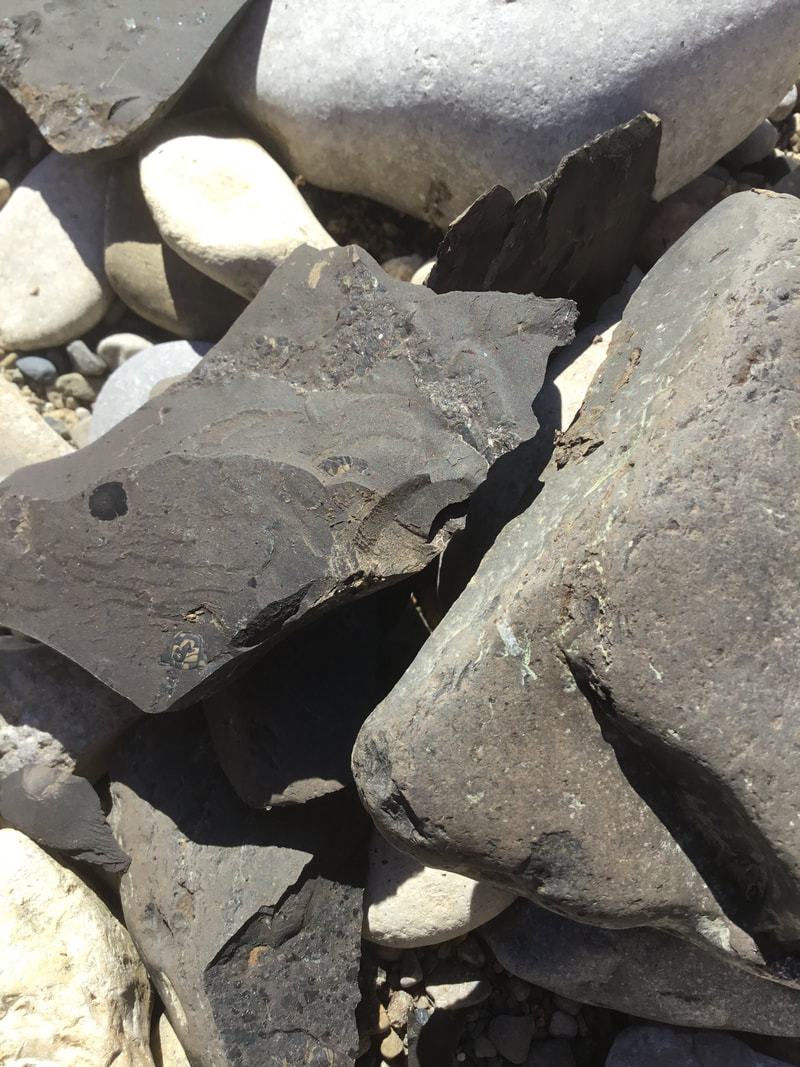 The nearest Ordovician outcrops are hundreds of kilometres away, and yet here are some very well-traveled and worn Ordovician shale containing the cranidia and moulted bits of Triarthrus. 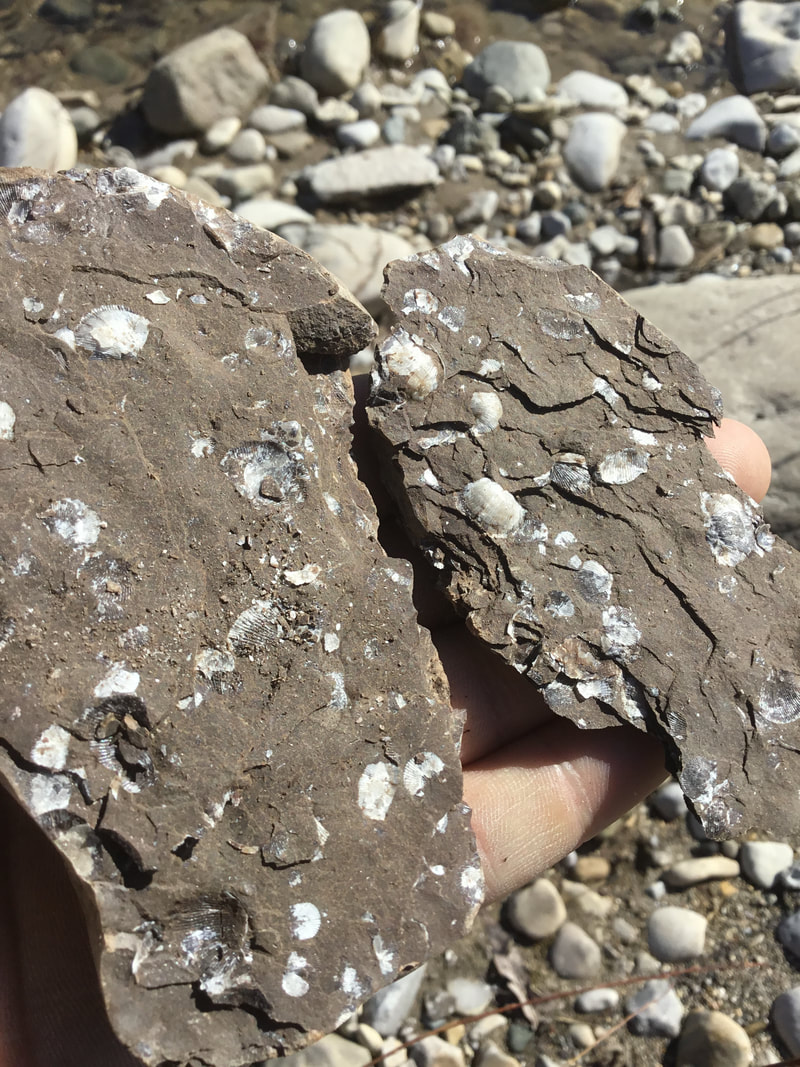 Shiny shell hash. 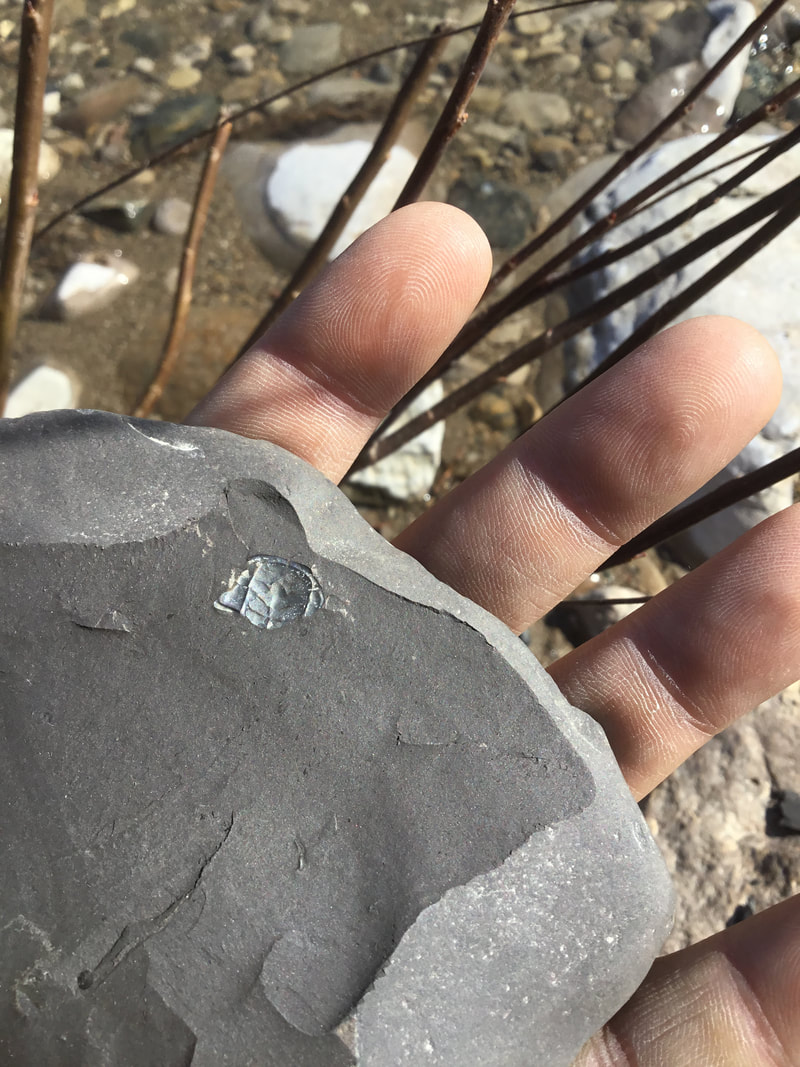 A healthy sized Triarthrus cranidium. 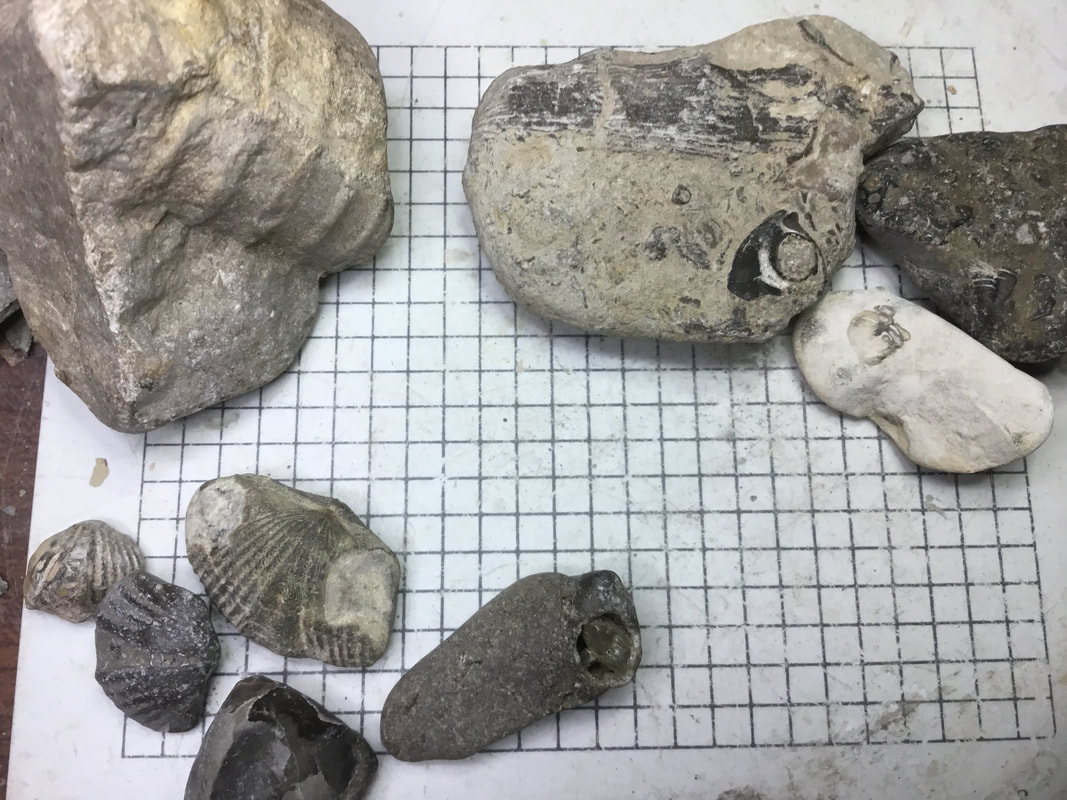 Top left is plump, thick-ribbed nautiloid, top right are the trilobite fragments, and below are water-worn brachiopods (one which has a nice calcite crystal inside). 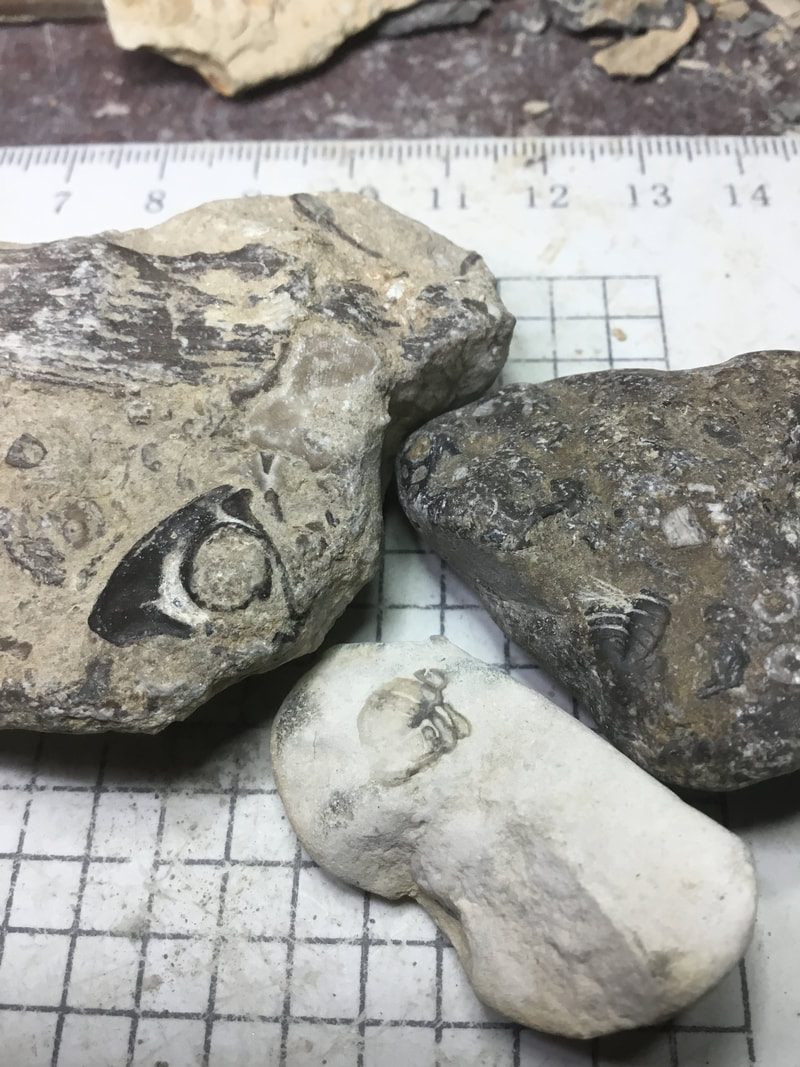 Closeup of the trilobite fragments.
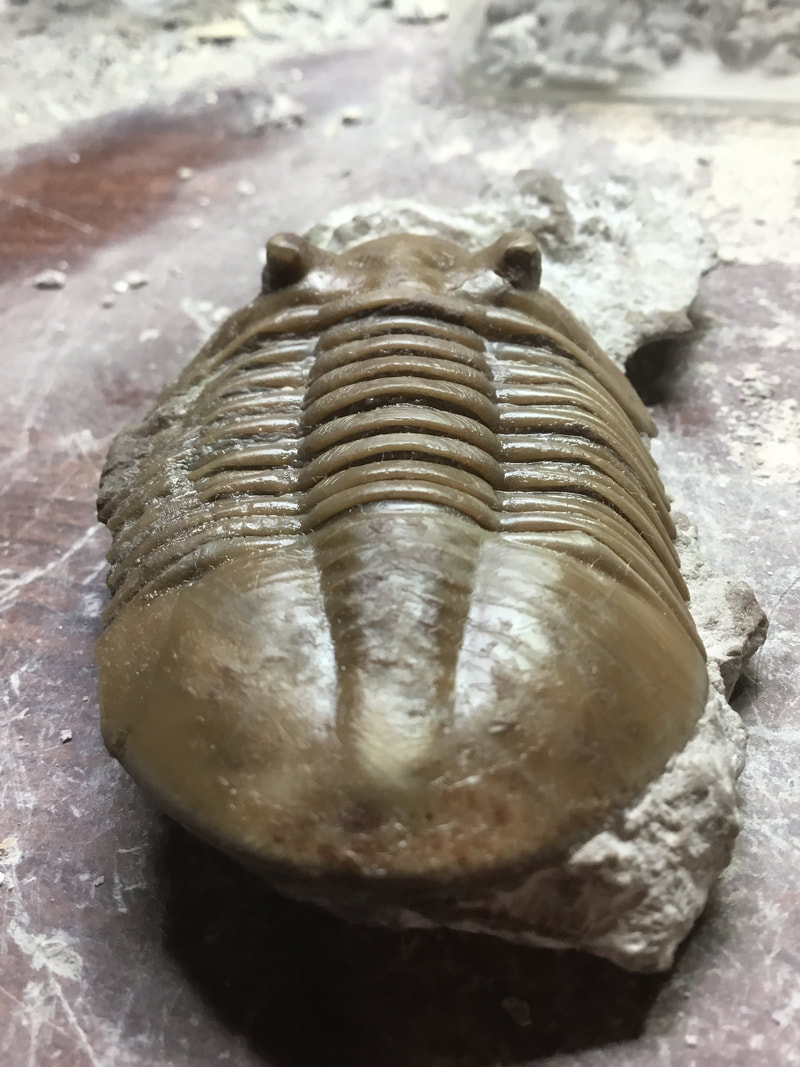
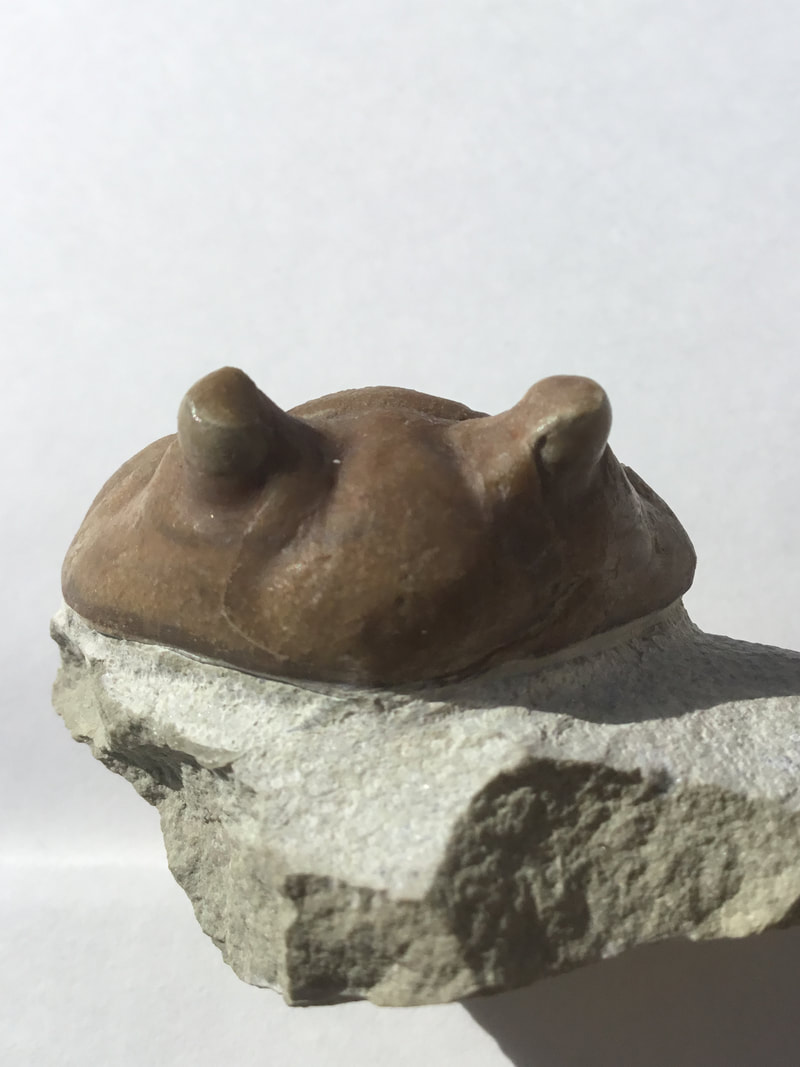
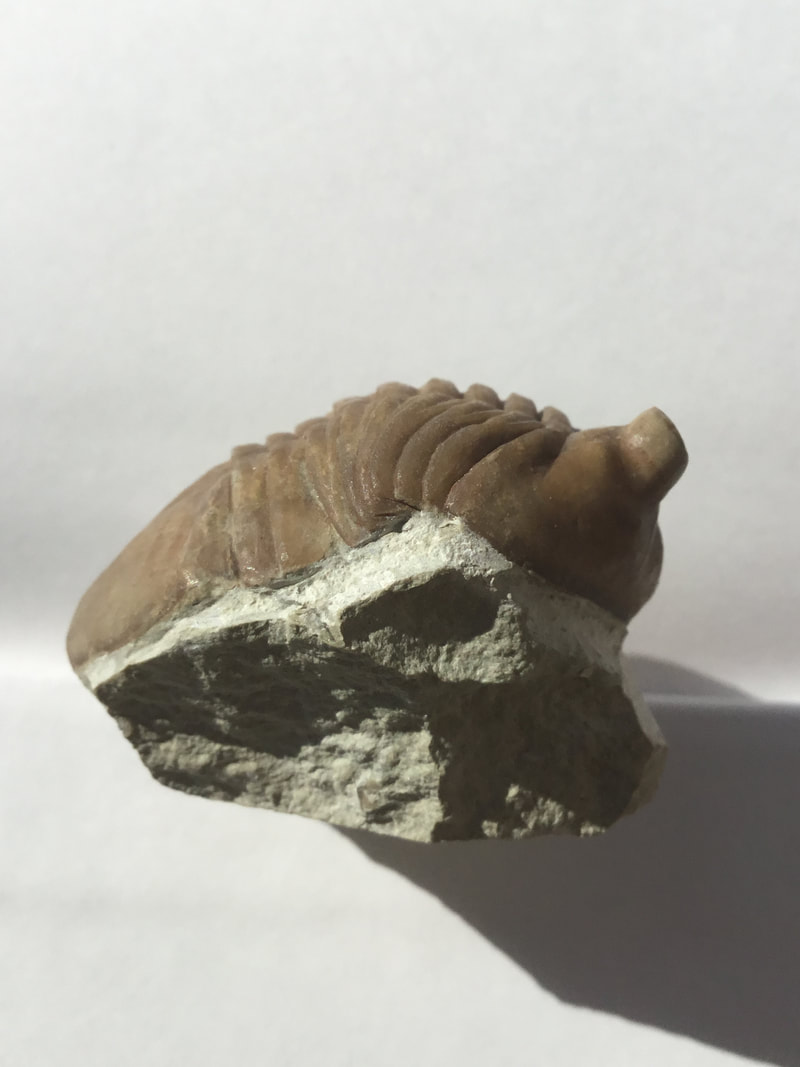
I have a soft spot for large asaphids (who doesn't? LOL), and the ones that occur in the Aseri Formation in St Petersburg, Russia are quite stunning for their size and apparent simplicity, if not their variation. As time went on, and with more turbid seas, these asaphids started developing longer eye stalks, or peduncles, so that they could - like modern day crabs - keep themselves buried while only their eyes would be above the sediment on the look-out for predators or prey. I recently purchased a Asaphus kowalewskii a few months ago, which also represents pretty much the extent of eye stalk development. 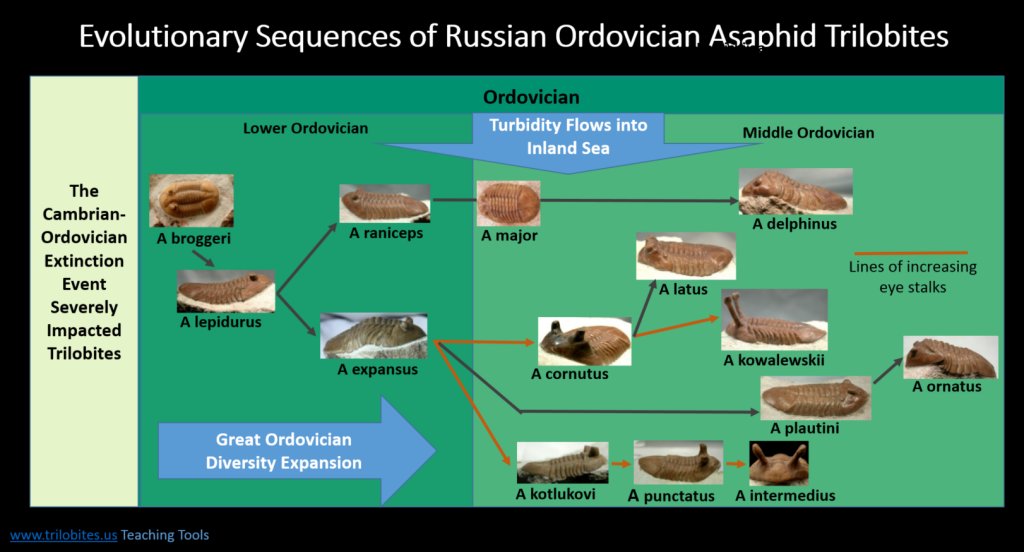 (Photo credit: http://www.fossilmuseum.net/Fossil_Sites/trilobites-russia/rissian-asaphida-trilobite-evolutionary-sequences.htm) -- Above you can see the evolutionary progression of the Russian asaphids. Arriving in the mail today were two more to add to the family: 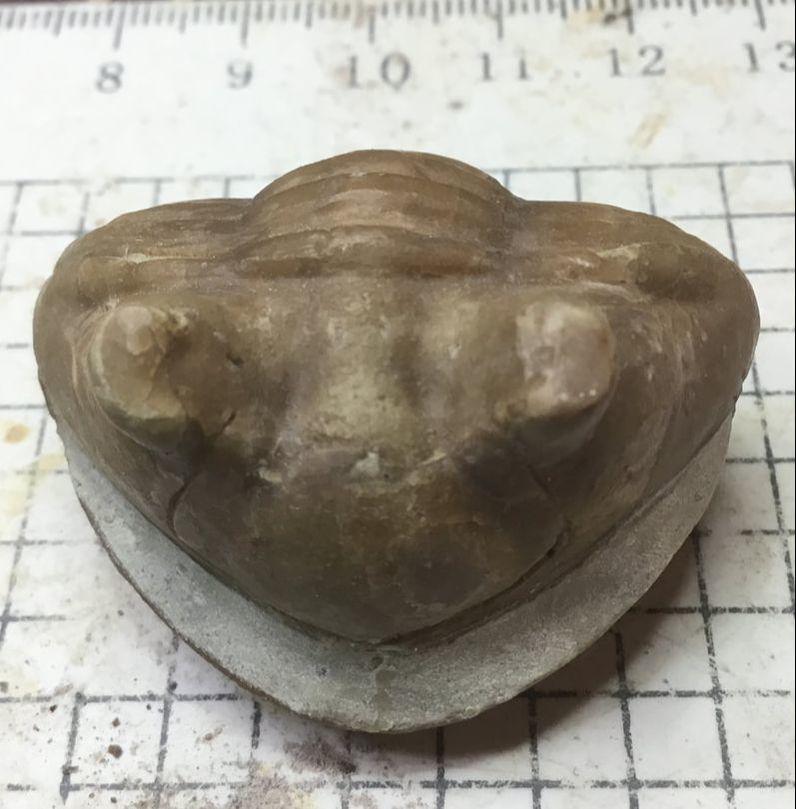 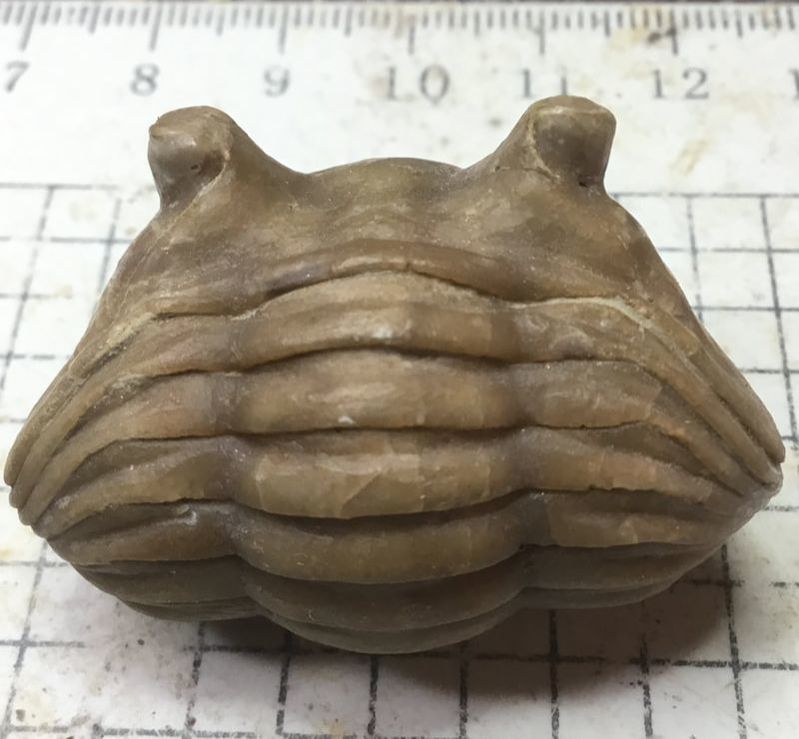 This enrolled specimen is Asaphus cornutus. The rolled up appearance gives it a kind of "Kermit" like look. My forum friend Roger has an Isotelus gigas (also a related Ordovician asaphid) that he nicknames Kermit. 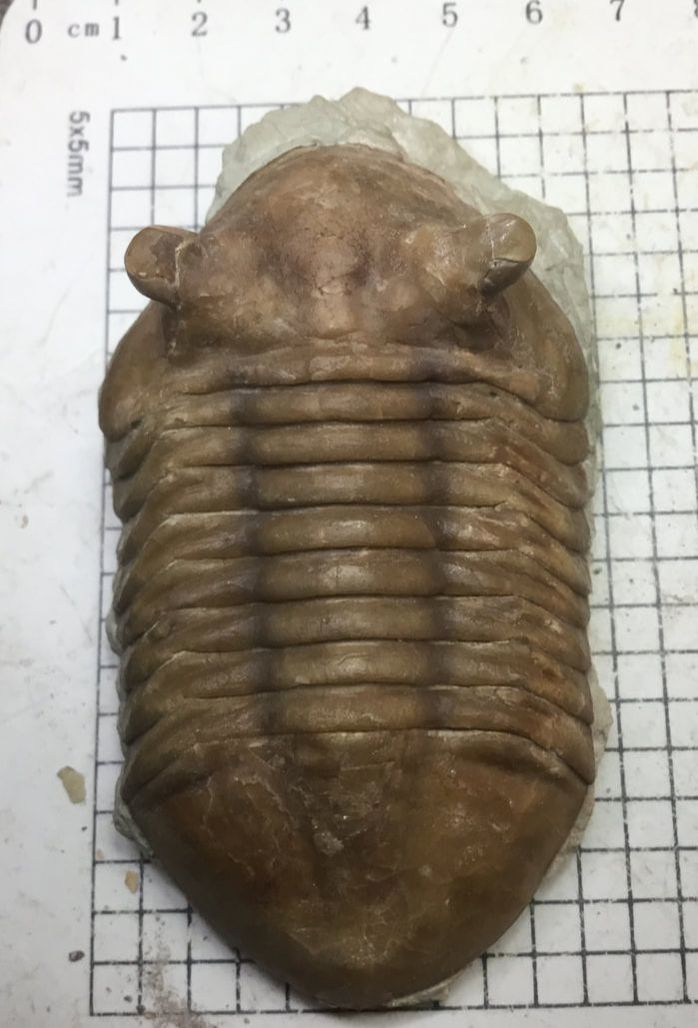 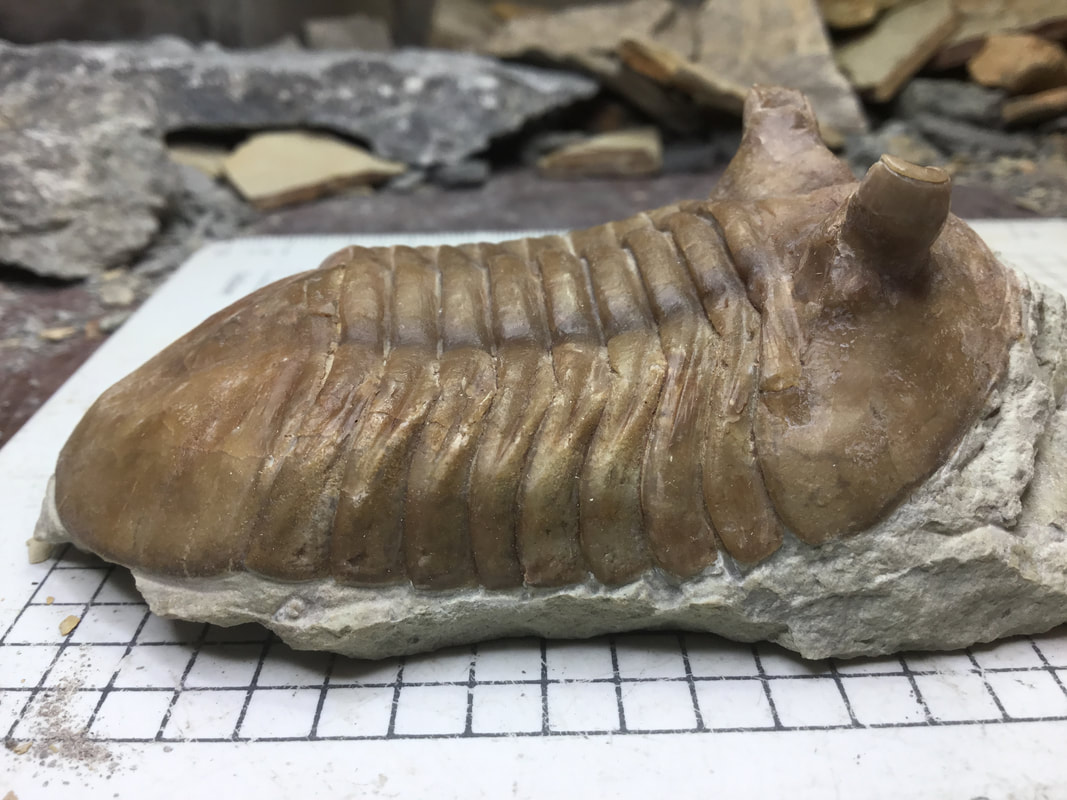 And this lovely and large prone is Asaphus punctatus. I'm pretty happy with these two new trilobites.
|
Kane Faucher
Archives
February 2024
|
 RSS Feed